

Understanding Mold Runner Systems in Injection Molding
One of the most important decisions to be made by engineers and procurement teams in modern plastic manufacturing is to choose the right runner system. Both Injection Molds and Mold Components are critical in determining not only the quality of the parts but also the profitability of the entire production run. Engineered and supplied at SSPrecision are precision mold runner systems, either hot or cold, to the automotive, medical, consumer electronics and packaging industries worldwide – and the reason why we hear the most questions is because of the question we hear most often of all which is: should I use a hot runner or a cold runner?
A runner system is merely the channel network within a mold which directs the molten plastic coming out of the nozzle of the injection machine to the cavity – where the actual part is formed. The variation between hot and cold runner systems is the management of this channel thermally, and that single difference produces a large downstream impact of cost, cycle time, material usage, and production efficiency.
This paper gives actual facts, industry data, and case-based analysis to assist manufacturers in making an informed choice.
Hot Runner vs Cold Runner: Core Definitions
What Is a Hot Runner System?
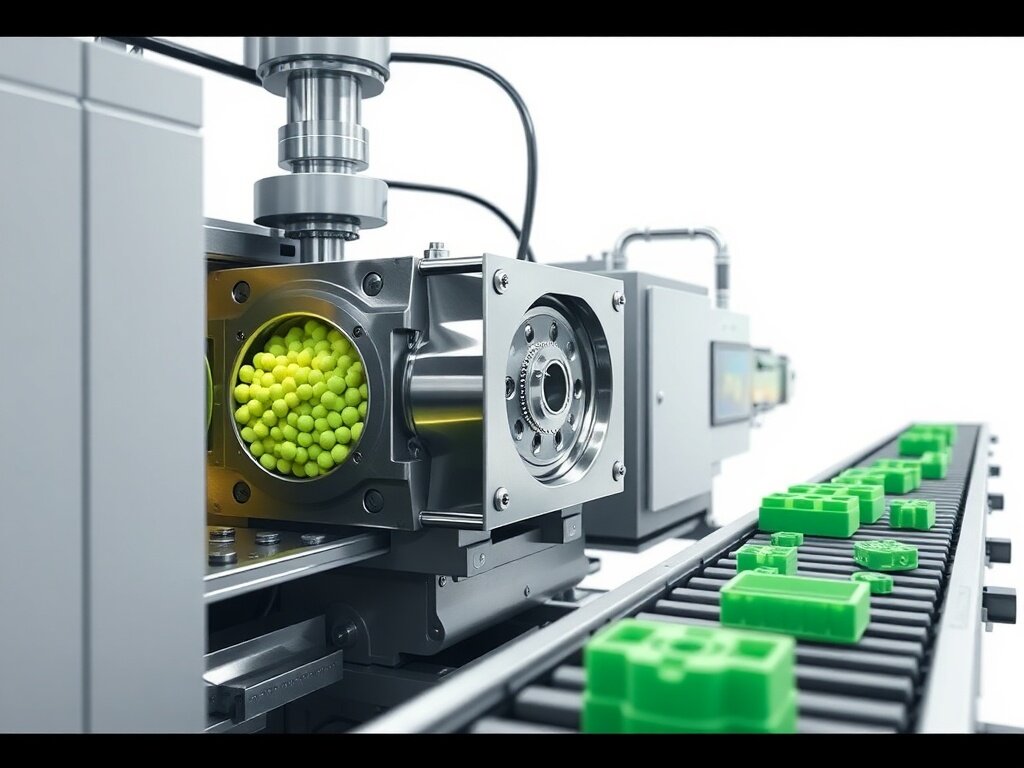
A hot runner system maintains the plastic in the runner channels in a continuously molten form through built-in heaters and a heated manifold. It removes the solidified runner (sprue) after every shot, that is, no material is wasted and no runner has to be removed or recycled. The plastic flows directly and immediately into the part cavity.
Common uses are high volume automotive parts, beverage cup lids, electronic enclosures and medical components where large volumes of pieces must be handled and high throughput is needed.
What Is a Cold Runner System?
In a cold runner system, the runner channels are not heated. Each injection cycle is followed by solidifying of the part and the runner. The cast runner is then discarded (generating waste) or reused by re-grounding and re-using as recycled material. Cold runners are much simpler in design and much less expensive to initially construct.
They suit best low-to-medium volumes of production, the materials that are hard to handle with hot runners (thermosets or some elastomers), and the needs when the cost of the mold is the main priority.
Mold Runner System Cost: A Data-Driven Comparison
The cost issue is not just the initial price of the tooling, but covers wastage of materials, energy, maintenance and long term payback. The following table is a comparison of real-world cost factors, based on the SSPrecision project data and industry benchmarks.
Table 1: Hot Runner vs Cold Runner — Cost Factor Analysis
| Cost Factor | Hot Runner System | Cold Runner System | SSPrecision Advantage |
| Tooling / Mold Setup | $15,000–$60,000+ | $3,000–$12,000 | Optimized hot runner tooling for lower upfront cost |
| Material Waste per Run | Near 0% (no sprue) | 15%–30% waste | Waste reduction solutions available |
| Energy Consumption | Higher (heaters active) | Lower (passive cooling) | Energy-efficient manifold designs |
| Maintenance Cost / Year | $1,500–$5,000 | $300–$1,200 | Modular parts reduce service cost |
| Break-even Volume | ~300,000–500,000 parts | Best for < 100,000 parts | Custom analysis provided per project |
| Long-term ROI | High (saves resin cost) | Lower at high volumes | Material savings up to 30% |
According to industry data provided by the Plastics Industry Association, manufacturers who switch to a hot runner system at volumes of above 500, 000 parts per year, on average, recover their investment in tooling within just 12-18 months, usually through material savings.
SSPrecision provides cost-modeling consulting service to assist clients in determining the actual break-even point, based on their resin price, mass per shot, and their estimated production volume each year – without having to guess at the numbers to make the decision.
Cycle Time Efficiency: Where Hot Runners Lead
Cycle time refers to the overall time taken to inject one shot of an injection molding process – between close of mold and ejection of part. Even a 2-3-second reduction in cycle time through a million-part annual run would save hundreds of machine hours. The following table is based on performance measurements of SSPrecision manufacturing settings.
Table 2: Hot Runner vs Cold Runner — Cycle Time & Throughput Data
| Performance Metric | Hot Runner System | Cold Runner System | Difference |
| Average Cycle Time | 8–18 seconds | 20–40 seconds | ~40–55% faster |
| Cooling Phase | Only part cooling required | Runner + part cooling needed | Significant reduction |
| Output / 8-hr Shift | ~1,600–3,600 shots | ~720–1,440 shots | Up to 2.5× more output |
| Gate Marks / Part Quality | Minimal gate marks | Visible gate marks possible | Better aesthetics |
| Runner Removal Step | Not required | Required — adds 5–15 sec | Eliminates extra step |
| Throughput at 1M Parts/Year | ~5–7 fewer machine hours | Baseline | Saves ~$8,000–$20,000/yr |
In one SSPrecision case study of a automotive interior clip (12g shot weight, 4-cavity mold), a shift of a cold runner to a hot runner system decreased cycle time by 53 percent, to 16 seconds. This would result in a cost savings of about $47,000 in machine time costs alone, over a 3-million-part annual production run.
Hot Runner vs Cold Runner: Which Should You Choose?
Choose a Hot Runner System When:
• Annual production volume exceeds 300,000–500,000 parts
• Material cost is high (engineering resins, specialty polymers priced above $5/kg)
• Part aesthetics require minimal or no gate marks
• Consistent part weight and dimensional stability are critical (e.g., medical devices)
• Multi-cavity molds (8, 16, 32 cavities) are being used for maximum throughput
• Automation and lights-out manufacturing are planned
Choose a Cold Runner System When:
• Production volumes are below 100,000 parts per year
• Mold development budget is limited and tooling cost must be minimized
• Material is a thermoset, silicone, or rubber compound incompatible with hot runners
• Frequent color changes are needed and purging flexibility is required
• The part size is large with a high resin volume per shot (reducing waste impact)
Injection Molding Savings with SSPrecision: Real-World Impact
SSPrecision is a Chinese manufacturer of precision mold components and a provider of mold solutions, serving global OEMs, Tier-1 suppliers and contract manufacturers. Having more than 15 years of experience, and ISO-certified production processes, SSPrecision designs and supplies hot runner and cold runner mold systems according to client specifications.
How SSPrecision Delivers Cycle Time Efficiency
SSPrecision’s engineering team uses Moldflow simulation software during the design phase to predict and optimize flow balance, gate location, and cooling time. This simulation-based first method can cut post-tooling changes by as much as 70 percent, which in the case of the company can cost between $5,000 and $20,000 per change.
In the case of hot runner systems, SSPrecision sources and integrates hot runners components of the leading manufacturers of manifold system components, and provides in-house calibration of temperature controllers to ensure uniform distribution of heat in all the cavities. Consistency between cavities is essential: even a change in temperature of only ±5°C can result in weight variation of the parts of more than 0.5 percent, and can lead to scrap rates that vaporize savings.
SSPrecision Cold Runner Expertise
Where a cold runner system is appropriate to the client, e.g., low-volume prototype tools or thermoset applications, SSPrecision engineers balanced runner layouts using trapezoidal and full-round cross-sections in order to minimize pressure drop and provide consistent fill in all cavities. Their naturally balanced designs do not require any valve gates or flow restrictions to keep the mold simple and maintainable.
Case Study Highlights
Case 1 — Consumer Electronics (Laptop Keyboard Frame)
Client: European consumer electronics brand. Volume: 2.4 million parts/year. Problem: Cold runner system producing 22 percent material waste on a $4.80/kg of ABS resin with a cycle time of 29 seconds. SSPrecision Solution: 8-cavity hot runner with valve gate technology. Outcome: The cycle time was decreased to 13 seconds; the material waste decreased to less than 1 percent; annual savings amounted to about %68,000 on material and machine time spent together.
Case 2 — Medical Device Component (Syringe Body)
Client: OEM manufacturer of medical devices. Volume: 800,000 parts/year. Challenge: There must be very strict FDA-grade part consistency with no contamination by regrind. SSPrecision Solution: Hot runner with 4-cavity fully balanced manifold, validated to ISO 13485 standards. Findings: The weight variance of the parts was kept to a minimum of ±0.03g; zero re-grind contamination risk; cycle time was held at 11 seconds.
Case 3 — Industrial Fastener (Cold Runner Optimization)
Client: Hardware distributor. Volume: 60,000 parts/year. Challenge: overly complex hot runner system of an old supplier that was very expensive to maintain. SSPrecision Solution: Redesigned to a naturally balanced 4-cavity cold runner system. Result: The maintenance cost decreased by 74 percent; the change in the time of mold decreased by half; tooling cost was also half.
Key Metrics Summary: Injection Molding Savings at Scale
When evaluating the long-term financial impact of runner system selection, consider these industry-verified benchmarks:
- Hot runner systems can save an average of 15-30% of the cost of raw materials through elimination of the waste known as runners.
- When changing from cold to hot runner at the same number of cavities, a cycle time improvement of 40-55 percent is attainable.
- Break-even Break-even at a specific volume of production is defined as 12 to 24 months at production volumes above 400,000 parts/year.
- Machine hour costs in injection molding average $50-$150/hour, depending on tonnage; each second saved in the cycle time directly saves this cost.
- SSPrecision clients have an average of 22% reduction in total cost-per-part in the first year of conversion to an optimized hot runner configuration.
Why SSPrecision Is a Trusted Partner for Die Manufacturing Cost Optimization
SSP Precision is an ISO 9001 & IATF 16949 certified manufacturer delivering end-to-end precision solutions, from design and prototyping to high‑volume production, for the automotive, medical, electronics, aerospace, and industrial sectors. We handle every stage in‑house — DFM engineering, rapid prototyping, CNC machining, EDM, grinding, and global logistics — to manufacture the tooling that makes your parts and the parts themselves.
What we build and supply:
- Stamping dies manufacturing and stamping die parts — high‑precision transfer stamping dies and progressive/compound dies for volume metal stamping.
- Injection molding and injection mold — custom injection molds for plastic components, including single‑, multi‑cavity, and over‑molding & insert‑molding tools that combine metal and plastic in one part.
- Specialty molded components — eco‑friendly green mold parts and microscopic medical micro‑molded parts.
- Precision metal and plastic end‑use parts — high‑volume serial production of precision products (metal stampings, plastic moldings) with full PPAP traceability.
- Tooling spare parts manufacturing & — tooling spare parts (punches, inserts, ejector pins) and precision robotics spare parts to keep your production running.
Frequently Asked Questions (FAQ)
Q1. What is the main difference between a hot runner and a cold runner in injection molding?
A hot runner system heats the plastic in the runner channels molten between shots, and prevents solidified waste in the runners. A cold runner system enables the runner to cool and solidify after each cycle and this requires removal or recycling. The major distinctions are in cost, material efficiency and speed of the cycle.
Q2. Is a hot runner system always more cost-effective?
Not always. Hot runner systems have superior long-term economics at large volumes (usually 300,000+ parts/year). In lower volume production or prototype production, the increased cost of the initial tooling of a hot runner might not be justified and a cold runner system can be more cost effective.
Q3. How much does a hot runner mold system cost compared to a cold runner?
Hot runner molds of the same number of drops can cost between $15,000 to $60,000 or more depending on complexity, whilst cold runner molds of the same number of drops may cost between %3,000 to $12,000 or more depending on complexity. The increased initial cost can be recouped by material savings over time, however, at volumes above 500,000 parts/year, the higher initial cost can be offset.
Q4. Can SSPrecision help me decide which runner system is right for my project?
Yes. SSPrecision offers a free pre-project consultation, which includes volume analysis, modeling of material cost and cycle time to determine what is the best system of runners to fit your particular production needs. Send an enquiry to visit ssprecision.com.cn.
Q5. What materials work best with hot runner systems?
Hot runner systems are compatible with most of the thermoplastics such as ABS, PP, PE, PC, PA (nylon), POM and PET. Silicones and thermosets, as well as some rubber compounds, tend to require cold runner systems because they are processed using a cure.
Q6. How does cycle time affect my overall injection molding savings?
Machine throughput directly depends on the cycle time. A 10-second decrease in time per cycle in 1 million yearly shots is a saving of about 2,778 machine hours. That would translate into a potential annual savings of $222,000 at an average hourly rate of $80/h
Q7. Does SSPrecision supply individual mold components for existing runner systems?
Yes. SSPrecision provides precision mold components such as gates, nozzles, manifold blocks, cooling inserts, ejector pins and hot runner tips both in new construction and replacement/upgrade projects. All parts are produced to strict tolerances with complete dimensional inspection documents.
Read More – Intelligence That Protects Your Production Line
- How injection Mold Design Impacts Cycle Time (Cooling Data) – Cooling eats 70% of your cycle time—here’s how conformal channels and smart design can cut it by 20–40% and boost annual output by 140,000+ parts per machine.
- Mold Component Quality: Pins, Bushings & Slides – A $0.30 ejector pin can cost you $45,000 in unplanned downtime—here’s the precision data on pins, bushings, and slides that separate 1M-shot molds from early failures.
- Aluminum vs Steel Molds: Price & Lead Time Data – Aluminum molds ship in 5 days and cost 30–55% less, but steel lasts 10x longer—here’s the real data to decide which is right for your volume.
- SPI vs LKM vs HASCO: Standard Comparison Guide – Choosing the wrong mold standard can add 30–50% to your cost or delay delivery by weeks—here’s how SPI, LKM, and HASCO compare across precision, price, and lead time.
- Injection Molding Cost Factors: Material & Cycle Data – A 14-second cycle time reduction saved $180,000 annually—here’s the real cost breakdown of materials, cycle times, and tooling that drives your part price.