


ISO 9001:2015 · IATF 16949 CERTIFIED
Transfer
Stamping Dies
& Custom Parts
SSP is a custom transfer stamping dies manufacturer in China for deep-drawn, large and complex metal parts. Transfer dies are engineered around your blank geometry, forming sequence, transfer system and production press.
From your drawing to tryout, our transfer stamping team reviews tool design, station layout and critical part dimensions in Dongguan. Send material grade, thickness, press data and annual demand for a project review.
- ±0.002 mm Tolerance
- Deep Draw Capability
- Robotic Integration
- 160–630 T Press Tryout
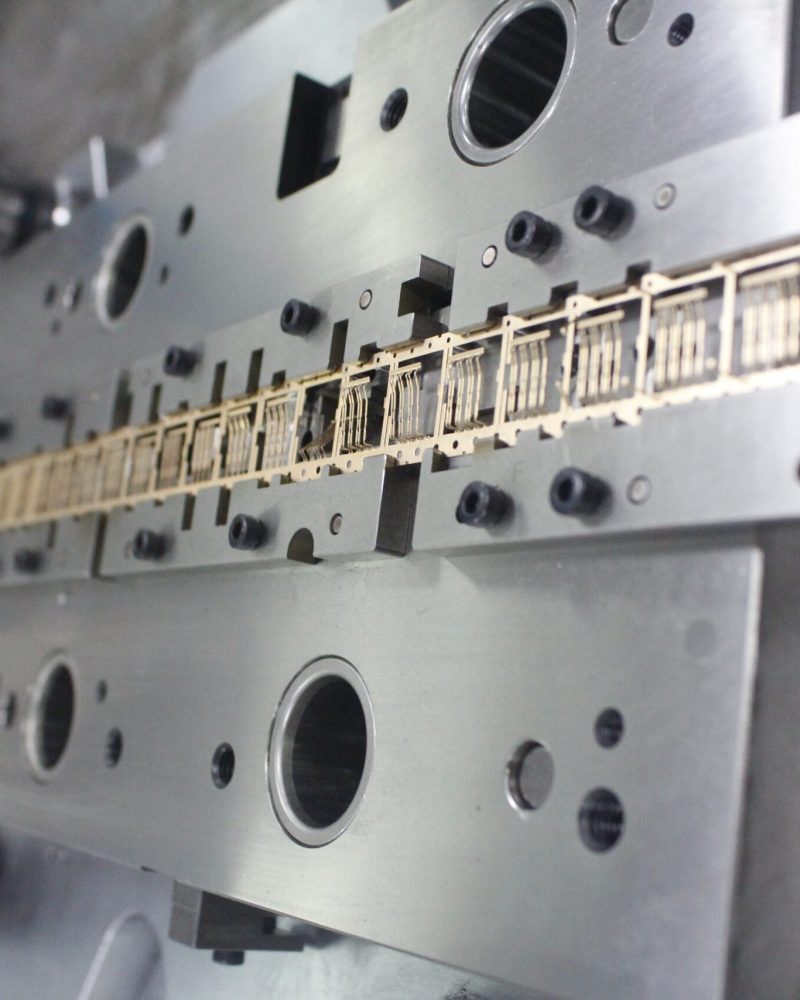
- ISO 9001:2015 & IATF 16949 Certified
- Building dies in Dongguan since 2008
- 150+ engineers & staff
- Tooling shipped to 40+ countries
- Dongguan, China · 9,000 m² Facility
Custom parts to your needs
All Kinds of Custom Parts, Made to Your Needs
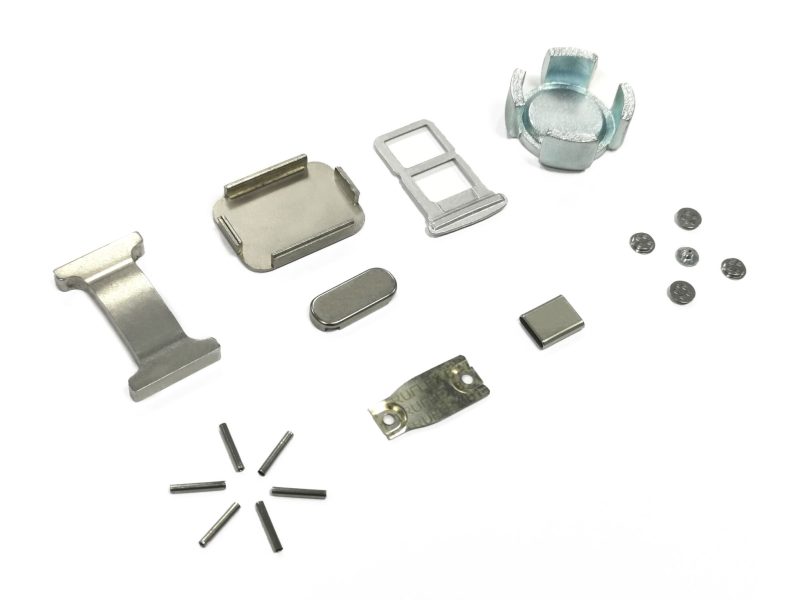
We don't only sell dies. SSP builds the tooling and produces the parts: tell us what you need, send a drawing, a sample or a sketch, and our engineers choose the process, build the die or mold and deliver finished parts with inspection reports. One supplier from prototype to mass production.
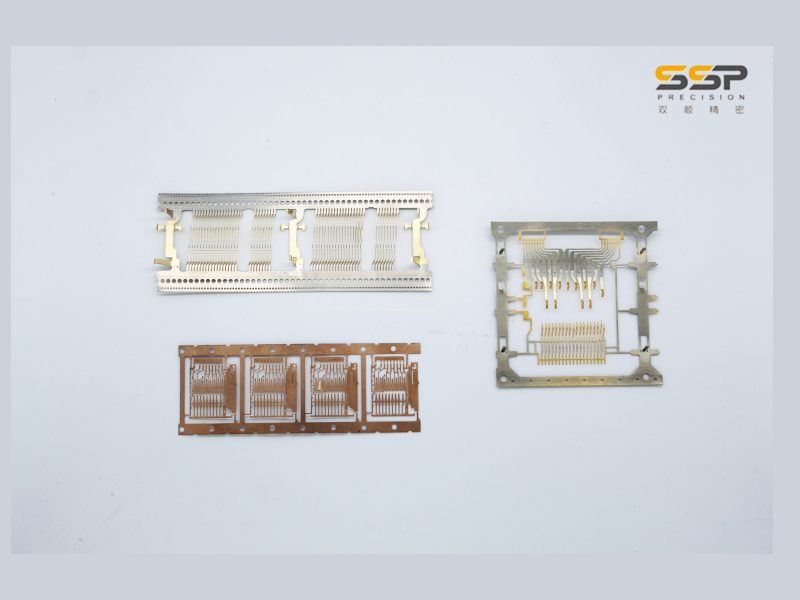
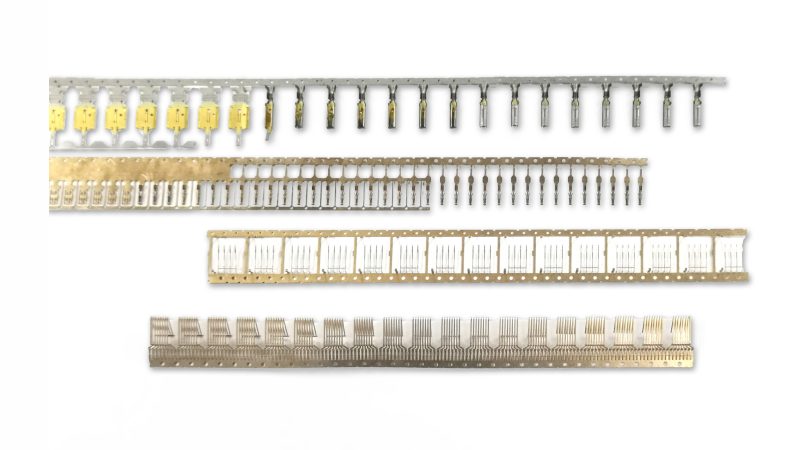
Lead frames and contact strips
Fine-pitch copper-alloy frames and contacts, plated and reeled to your specification.
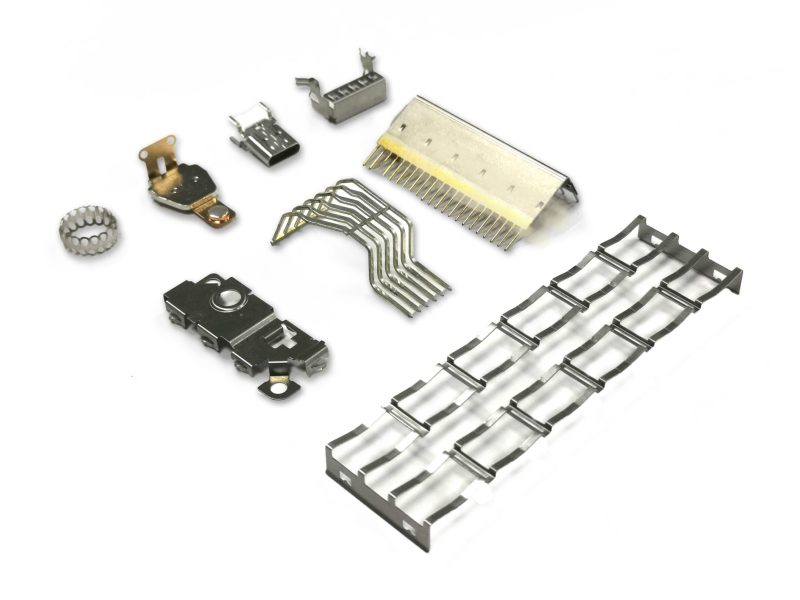
Custom stamped brackets, shields and springs
Steel, stainless, copper and aluminum parts blanked, formed and pierced to your print.
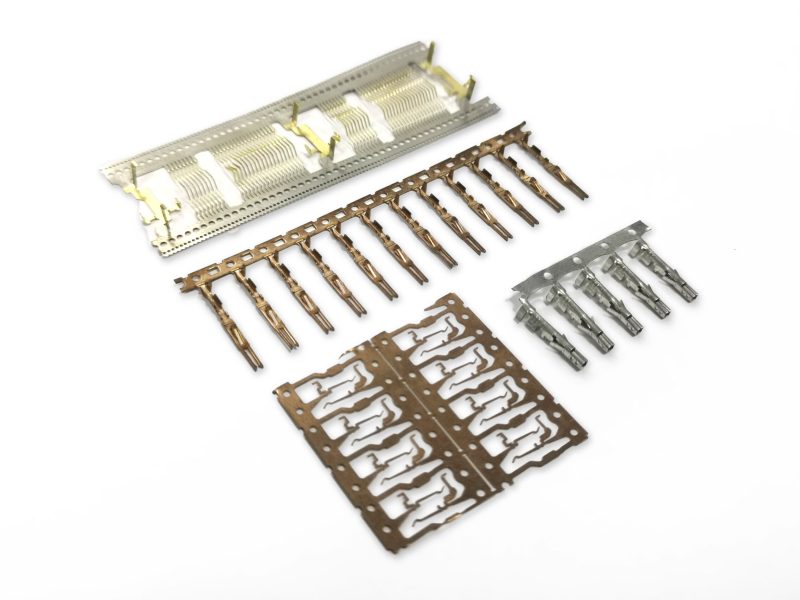
Terminals and connector contacts
Pins, terminals and contacts on reel or loose, from progressive and hybrid transfer dies.
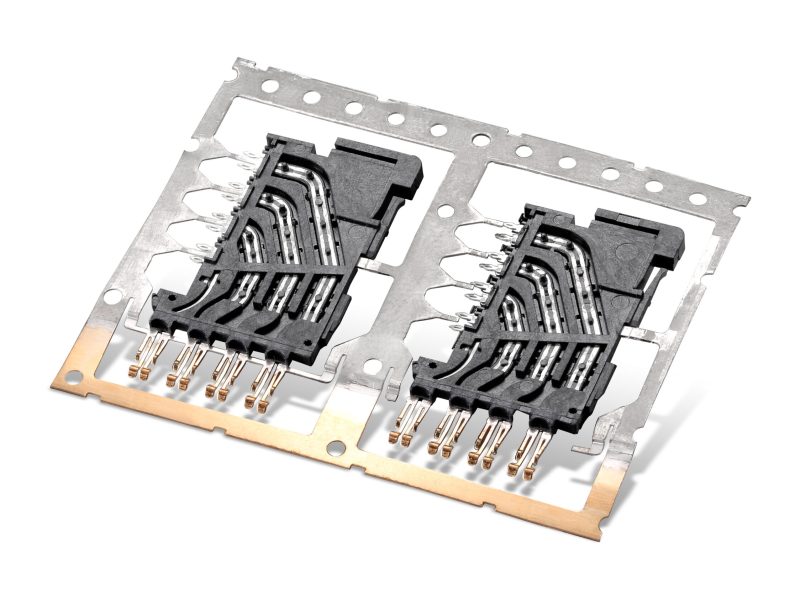
Stamped and insert-molded parts
Metal contacts stamped in-house, then over-molded in plastic as one assembly.
- Drawing, sample or sketch
- Prototype to mass production
- DFM with every quote
- NDA on request
- EXW · FOB · DDP
Also made to order: serial production of precision parts, CNC machined parts, injection molded parts and custom tooling spare parts.
What is transfer die stamping?
How Transfer Die Stamping Works
In transfer stamping, the blank is separated from the coil and moved between stations by transfer fingers, a servo bar or a robot. Deep draw dies can combine drawing, redrawing, trimming and piercing as the part develops. The transfer path, gripping points and forming sequence must be checked against the required geometry and press clearance.
Each station does one job: blanking, drawing, redrawing, trimming, piercing, flanging or restriking. That is how one transfer die turns a flat blank into a deep cup, a housing or a structural bracket, one finished part per press stroke.
Before any steel is cut, our engineers simulate the forming sequence in AutoForm to check material flow, thinning and springback, then set the blank shape, station order and draw depths from the results.
Best for deep, large or reoriented parts
Deep draws and redraws, heavy or large blanks, parts that must turn between stations, and nested blanks that waste less material than a carrier strip.
Best for small, flat parts at high speed
Flat or shallow-formed parts fed from coil on a carrier strip at the highest stroke rates. See our progressive die stamping service.
- ±0.002 mmGround punches, inserts and draw rings
- 3–10Stations per transfer die
- 160–630 TIn-house tryout presses
- 1M+Parts produced from SSP tooling
Transfer die types
Transfer Stamping Dies We Design and Build
Every die is engineered around your part drawing, sheet material, annual volume and press line. Tell us the press and transfer system you run, and we build the die to fit it.
Progressive-transfer hybrid dies for connectors and shields
A strip-fed section pierces and blanks at high stroke rates, then a transfer section forms what a carrier strip can't hold.
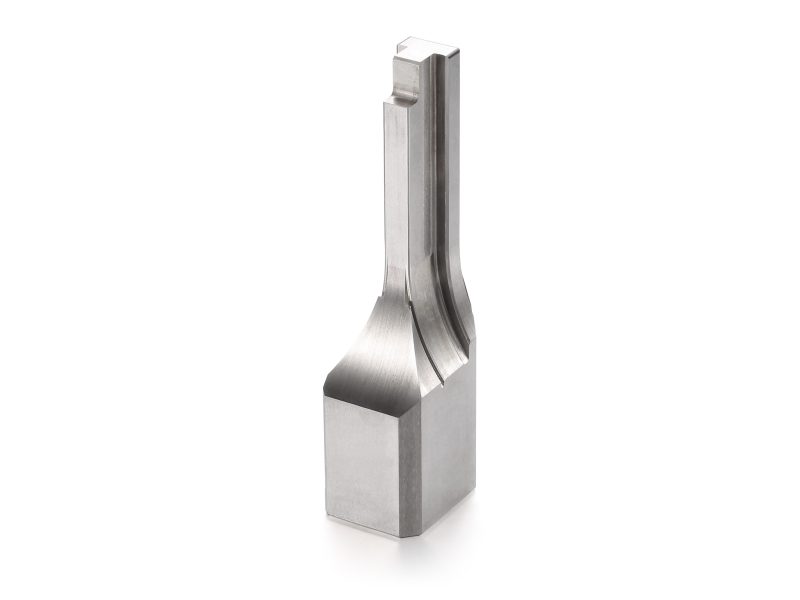
Station inserts, punches and die parts
Replacement stations for dies already in production, ground to ±0.002 mm and shipped with a CMM report.
Type 01
Single-station transfer dies
One main forming operation per die, often run in tandem lines: deep cups, shells and brackets with formed radii.
- Cups · shells · brackets
- Steel · aluminum
Type 02
Multi-station transfer dies
Three to ten stations blank, draw, iron, trim, pierce and flange in sequence, producing a finished part on every press stroke.
- 3–10 stations
- Finger or servo transfer
- Robot-ready
Type 03
Deep draw transfer dies
For draw ratios above 2:1: staged draws and redraws with precision blank holders, nitrogen gas springs and draw beads set from simulation.
- Draw ratio > 2:1
- N₂ gas springs
- AutoForm-simulated
Type 04
Progressive-transfer hybrid dies
Pierce and blank in a strip, then transfer the loose part through forming stations. Suits connector shells, shield cans and small drawn parts.
- Hybrid feed
- High stroke rate
- Connectors · shields
Type 05
Transfer die replacement tooling
Station inserts, blanking and draw punches, draw rings and trim steels made to your drawing or a worn sample, typically in 7–15 days.
- 7–15 days
- Carbide option
- CMM report
Type 06
Transfer die components
Transfer finger tooling, cams, heel blocks, guide posts and bushes, and nitrogen gas spring installations built to your die standard.
- Built to OEM standards
- Guide components
- Cams
Standard sizes in our die components catalog
Transfer die manufacturing services
Transfer Stamping Dies: Engineering & Tryout
Design, simulation, toolmaking, tryout and after-sales support all happen in our 9,000 m² plant in Humen, Dongguan, so one engineering team owns your die from quote to shipment.
Service 01
DFM and forming simulation
Formability review, blank development and station layout, simulated in AutoForm for thinning, wrinkling and springback before steel is ordered.
See our design and manufacturing support
Service 02
In-house toolmaking
High-speed machining centers, Seibu and Sodick wire EDM, sinker EDM and surface grinding in our own toolroom. Ground punches and inserts are held to ±0.002 mm.
Service 03
Press tryout and validation
Tryout on our 160–630 T presses: blank-holder pressure, draw beads and transfer timing are tuned, and first-article parts are measured before the die ships.
How we handle stamping die manufacturing and tryout
Service 04
Transfer automation interfaces
Finger and gripper design, crossbar and servo transfer bar interfaces, and robot pick points engineered into the die from the first layout.
Service 05
Inspection and documents
CMM dimensional reports, material certificates and hardness results with every die. FAI reports with ballooned drawings; PPAP documents on request.
Service 06
Aftermarket support and maintenance
Troubleshooting, die reconditioning and replacement station inserts, including for dies built by other toolmakers, from drawings or a worn part.
Read about tracking and preventing die wear
Production process
How We Build a Multi-Station Transfer Die
Eight stages, each signed off before the next starts. You get design reviews at the layout stage and tryout data before the die leaves Dongguan.
- 01
Part review and DFM
Drawing, material and volume check; formability risks flagged in the quote.
- 02
Forming simulation
AutoForm run for thinning, springback and draw depth at every station.
- 03
Station layout and die design
Blank shape, station order, transfer pitch and finger positions fixed in 3D for your approval.
- 04
Die steel and heat treatment
D2/SKD11, DC53, SKH-51 or carbide inserts, vacuum hardened to spec (D2 at HRC 58–62).
- 05
Machining, EDM and grinding
Machining centers, wire EDM and surface grinding; punches and inserts ground to ±0.002 mm.
- 06
Assembly and fitting
Stations assembled, clearances, pilot and transfer heights set and recorded.
- 07
Press tryout and FAI
Tryout on 160–630 T presses; first-article parts measured on CMM against your drawing.
- 08
Pack and export
Rust-proofed, crated and shipped with the CMM report, material certificates and tryout records.
Capability
Transfer Die Capabilities at a Glance
The limits we build to. If your part sits outside them, send the drawing anyway: our engineers will tell you what is possible and what it costs.
| Die types | Single-station, multi-station (3–10 stations), deep draw and progressive-transfer hybrid dies |
|---|---|
| Part transfer | Mechanical transfer fingers, servo transfer bar interfaces, robot loading and unloading |
| Sheet thickness | 0.1–6 mm |
| Sheet materials | Cold-rolled and HSLA steel, AHSS/UHSS up to 1,500 MPa, stainless steel, aluminum (1xxx–7xxx series), copper, brass, titanium and nickel alloys |
| Maximum part size | 1,016 × 711 mm (40 × 28 in) |
| Draw ratio | Above 2:1 with staged draws and redraws |
| Die component tolerance | ±0.002 mm on ground punches, inserts and draw rings |
| Stamped part tolerance | Agreed at DFM for your material and geometry, then proven at tryout with a CMM report |
| In-house tryout | 160–630 T presses |
| Simulation | AutoForm forming simulation: material flow, thinning, wrinkling and springback |
| Inspection | CMM, optical and height-gauge measurement, Rockwell hardness testing |
| Documents | CMM report, material certificates, hardness results and tryout records; FAI; PPAP on request |
| Lead time | 3–16 weeks depending on station count and part size (see the FAQ); spare inserts 7–15 days |
Materials
Die Steels and Sheet Materials for Transfer Dies
We choose die steels for the sheet you stamp, the stroke count you need and the wear each station sees. Incoming steel is checked against its material certificate and every hardened part is hardness-tested. Our tool steel hardness chart lists typical HRC ranges.
D2 / SKD11
Cr12MoV cold-work tool steel
Our standard for cutting and forming inserts: high wear resistance at HRC 58–62, and stable in heat treatment.
- Trim steels
- Forming inserts
DC53
Tougher cold-work tool steel
Similar hardness to D2 with better toughness, for draw punches and inserts that chip in D2. See D2 vs DC53 for stamping.
- Draw punches
- AHSS forming
SKH-51 / M2
High-speed steel
Piercing punches and small-diameter punches that need hardness and edge strength, often PVD-coated for high-strength steel.
- Piercing punches
- Coated option
Tungsten carbide
For long-run cutting edges
Blanking and trimming sections for very high volumes and abrasive materials, where tool-steel edges would need frequent regrinding.
- Blanking
- High volume
45# / P20
Die shoes and plates
Medium-carbon steel die shoes and pre-hardened P20 plates and holders, machined flat and parallel to carry the stations.
- Die shoes
- Holders
Sheet we stamp
Work materials, 0.1–6 mm
Every die is simulated for the actual sheet grade and thickness you will run in production.
- CRS · HSLA
- AHSS to 1,500 MPa
- Stainless
- Aluminum
- Copper · brass
Surface engineering
Die Coatings and Surface Treatments
Chosen station by station to control galling, wear and part release, especially on draw punches and radii that see the most sliding contact.
Vacuum heat treatment
Hardness to specification with low distortion; every hardened insert is hardness-tested and the result goes in the report.
PVD coatings: TiCN, TiAlN, CrN
Hard, thin coatings that reduce galling on draw punches and forming inserts, especially on stainless and coated steels.
DLC coating
A low-friction coating for aluminum and copper forming, where material pick-up on the punch is the main problem.
Nitriding
A wear-resistant case with minimal dimensional change, used on larger forming steels and guide components.
Polished draw radii
Draw radii and punch noses polished to Ra 0.1 µm or better to cut friction, galling and scratch marks on drawn parts.
Precision grinding
Punch profiles, insert faces and die clearances ground and checked to ±0.002 mm, so replacement stations drop in without refitting.
Industries
Industries That Use Our Transfer Stamping Dies
SSP tooling runs in customer plants in more than 40 countries, wherever part depth, wall thickness and repeatability decide the die design.
Automotive
Brackets, reinforcements, seat components and deep-drawn housings in HSLA and advanced high-strength steels, with PPAP documents on request.
Electronics and connectors
Shield cans, connector shells, EMI covers and heat-sink housings in copper, brass and stainless steel.
Industrial equipment
Motor housings, pump and valve parts and actuator shells that need several forming stages and an even wall thickness.
Why SSP
Why Buyers Choose SSP as Their Transfer Die Manufacturer
ISO 9001:2015 and IATF 16949
A quality system certified to ISO 9001:2015 and the automotive standard IATF 16949, with documented processes and traceability.
Simulated before steel is cut
AutoForm forming simulation of every station, so draw problems are solved on screen instead of in tryout.
A complete toolroom in one plant
Machining centers, Seibu and Sodick wire EDM, surface grinders and CMM inspection, with no critical step outsourced.
Tried out on our own presses
Dies are run on 160–630 T presses and first-article parts are measured before shipment, not just visually checked.
China cost, export-ready paperwork
Competitive toolmaking cost from Dongguan, EXW, FOB or DDP terms, and export documents prepared for 40+ countries.
Spares for the life of the die
Your die drawings stay on file, so replacement station inserts ship in 7–15 days.
SSP at a glance
Transfer die manufacturer and custom parts supplier in Humen, Dongguan
Buyer questions
Transfer Stamping Dies: Questions Buyers Ask
A progressive die moves a continuous metal strip through its stations, so the part stays attached until the last cut. That suits small, high-volume parts. A transfer die cuts the blank free first and moves it between stations on fingers, a transfer bar or a robot, so the part can be drawn deeper, turned between stations and made larger than a strip could carry. Transfer dies usually cost more to build but save material on large parts.
Yes. We make all kinds of custom parts to your needs: deep-drawn cups and housings, stamped brackets, shields and springs, terminals and connector contacts, lead frames, insert-molded assemblies and CNC machined parts. You can buy the transfer die alone to run in your own press, or order finished parts from us and let SSP own the tooling, production and inspection.
Yes. Send the part, a photo with key dimensions or a sketch with your requirements. We measure samples on CMM and optical equipment, model the part and send you a drawing to approve before quoting the die or the production run. An NDA can be signed before you share files.
There is no MOQ for prototypes and samples. For production, we quote to your annual volume and recommend the most economical tooling: a transfer die, a progressive die or a simpler tool for low volumes.
Choose a transfer die when the part needs deep or repeated draws, is too large or heavy to stay on a carrier strip, has to be reoriented between operations, or when nesting loose blanks saves more material than a carrier strip would waste. For small, flat parts at very high volume, a progressive die is usually cheaper per part. Our progressive vs transfer stamping dies guide compares both in detail.
Tool-component accuracy and stamped-part tolerances should be specified separately for transfer stamping dies. This page lists grinding capability to ±0.002 mm on selected punches, inserts and draw rings; confirm the applicable features during drawing review. Finished part dimensions depend on the sheet grade, thickness, geometry and forming sequence. Identify measurement datums, critical assembly fits and the sample inspection method. Agree a tryout plan using the intended material, and review the dimensional report before accepting the tool. One tooling capability figure should not be treated as a blanket part tolerance.
SSP reviews transfer stamping dies around your press and robotic or servo transfer system. Supply bed and bolster dimensions, shut height, stroke, transfer pitch, lifting travel and gripper or finger details. Identify the loading and unloading method and any existing interface drawings. The review should cover gripping points, part orientation, clearance throughout the transfer path and access for maintenance. Confirm who supplies the transfer equipment and who validates integration on your line. Agree the trial configuration before the station layout and die design are released.
Cold-rolled and high-strength steel, advanced high-strength steel up to 1,500 MPa, stainless steel, aluminum alloys from the 1xxx to 7xxx series, copper, brass, and titanium and nickel alloys, from 0.1 mm to 6 mm thick. Each die is simulated for the actual sheet grade and thickness you will run.
Single-station transfer dies take 3–5 weeks, multi-station dies with 3–6 stations 6–10 weeks, and large dies with 6–10 stations 10–16 weeks. That is longer than the 20–35 days we quote for standard stamping dies, because every station is simulated, built and tried out in sequence. Replacement station inserts ship in 7–15 days. You get a firm schedule with the quote; our China tooling lead-time data shows where the time goes.
Specify the documentation and acceptance pack when ordering transfer stamping dies. Agree the required tool and part drawings, dimensional report, material records, hardness results and press tryout evidence. State whether the sample inspection must reference a ballooned drawing, customer form or automotive PPAP requirement. Tool records and part approval serve different purposes, so identify both scopes. Also confirm the maintenance instructions, spare-parts list, lifting information and setup data needed by the receiving factory. Resolve outstanding trial issues and document approval before dispatch.
SSP can review replacement components for transfer stamping dies built by another toolmaker. Provide the drawing revision, photographs and the original component or sample where available. Identify worn surfaces and critical mating fits so wear is not copied into the replacement design. Agree the material, hardness, coating and inspection requirements before manufacture. A replacement insert may need fitting or a press trial after installation; define that responsibility with your maintenance team. Use custom tooling spare parts manufacturing for the component enquiry.
Start your project
Request a Quote for Custom Transfer Stamping Dies and Parts
Upload your part drawings (STEP, IGES, DWG or PDF), photos of a sample, or simply describe what you need, with material, thickness and annual volume. A die engineer replies within 24 hours with a tooling concept, lead time and price for the die, the parts, or both.
- Custom dies and parts
- ISO 9001:2015 · IATF 16949
- 160–630 T in-house tryout
- ±0.002 mm die components
- Ships to 40+ countries
SSP · Transfer stamping dies manufacturer and custom parts supplier · Humen, Dongguan, China · Engineers reply Mon–Fri, 9:00–17:00 China Standard Time