







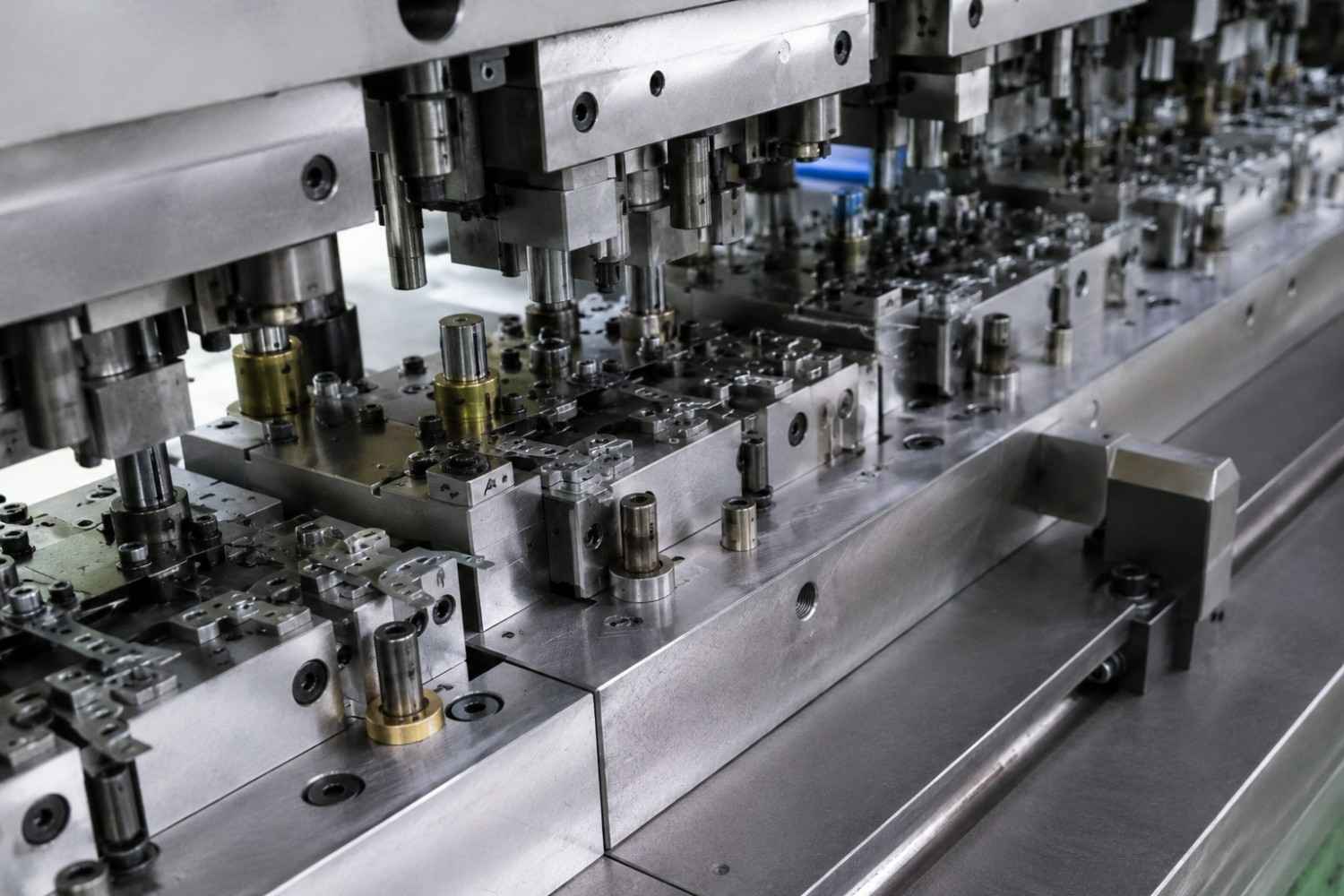
Choose metal stamping vs laser cutting by comparing complete routes to the same accepted part, then test the economics against the quantity and design stability you can justify. Laser cutting offers contour flexibility; dedicated stamping tooling can combine cutting and forming operations for repeated production. These distinctions follow the process descriptions from [1] TRUMPF and [3] Kenmode. Neither process wins every geometry, tolerance or order quantity.
This guide provides a practical sheet metal process selection method: define the delivered part, screen the operations, compare inspection requirements, and calculate a quote-specific volume crossover. The worked costs are deliberately hypothetical so you can reproduce the arithmetic and replace every input with a real quotation.
Process selection in brief
- Compare finished, inspected parts with equivalent material and finishing scope.
- Separate profile cutting from bending, drawing, joining and other required operations.
- Use accepted lifetime quantity for a defined revision in the cost comparison.
- Review edge condition, critical dimensions and validation evidence before choosing on price.
Define the same delivered part
Begin with a drawing revision, material grade and condition, specified thickness, finish, delivery form and acceptance requirements. For the proposed review, each route must deliver that same scope. A quote for a flat blank is not directly comparable with a quote for a formed, cleaned and inspected bracket.
Kenmode’s stamping guide distinguishes blanking and piercing from bending, drawing and embossing, and describes custom tooling as an upfront development activity. [3] Kenmode. Its separate secondary-operations list includes hardware insertion, welding, cleaning and finishing. [5] Kenmode. These examples explain why the process name alone does not define the delivered component.
Our proposed comparison starts with an operation list beside the drawing. Identify which operations each supplier includes, which are subcontracted, and which remain with the buyer. Ask for the inspection and packaging scope in the same record. Resolve exclusions before calculating a cheaper route; otherwise the comparison can reward an incomplete quotation.
Use SSP’s tooling and manufacturing overview to orient a stamping enquiry, then provide the actual drawing and production assumptions. This guide does not establish that SSP offers laser-cutting production or owns a particular machine. Confirm the supplier and responsibility for each proposed route.
Metal stamping vs laser cutting: geometry screening
TRUMPF explains laser cutting as local heating that melts or vaporizes material while the beam follows the contour. It identifies small batches, varied designs and prototypes as applications of that flexibility. [1] TRUMPF. In contrast, Kenmode describes progressive stamping as advancing strip through successive operations in a dedicated die. [3] Kenmode. The useful question is which arrangement fits the actual features and revision plan.
Keep CNC punching separate from dedicated die stamping in the comparison. TRUMPF’s punching description concerns a punch and die cutting the sheet by shear, with repeated shapes suited to punching and more variable contours suited to laser processing on a combined machine. [2] TRUMPF. That is relevant mechanism guidance, not evidence that a turret punch has the tooling investment or output of a progressive die.
| Part requirement | Route question | Evidence to request |
|---|---|---|
| Flat profile with changing cut-outs | Can a programmed cutting route accommodate the anticipated revisions? | Current-revision sample, cut-feature inspection and quotation for changes. |
| Repeated cut and formed features | Can an approved stamping sequence combine the required operations? | Proposed operation sequence, material review and finished-part trial plan. |
| Drawn recess or embossed feature | Which forming operation supplies the depth after any blank cutting? | Forming feasibility review and local dimensional/thickness acceptance. |
| Critical edge contacting another part | What edge condition is delivered after cutting and finishing? | Approved edge criteria, representative sample and inspection method. |
| Holes related across a bend | How will the complete route control their assembled relationship? | Finished-state datum plan and functional inspection. |
| Frequent small variant orders | How many setups, tools and stock allocations does each variant need? | Variant-by-variant quote and change-control plan. |
The checklist deliberately has no universal minimum order or thickness limit. It is a screening tool, not a machine capability table. If the suppliers propose different part designs, record the differences and obtain engineering approval before calling the routes equivalent.
Separate the blank from the formed component
A beam-cut outline does not by itself define a formed cup or bent bracket. Laser cutting supplies the cut geometry; bending or drawing must appear as another operation where the part requires it. That route distinction follows TRUMPF’s cutting mechanism and Kenmode’s descriptions of forming operations. [1] TRUMPF; [3] Kenmode.
For a stamping option, compare the proposed physical stamping-die configurations with the operations the drawing needs. Ask the tool designer which features are made in the die and which require subsequent work. Do not assume that every requested finish or assembly step is included simply because several forming operations are combined.
Compare edges and dimensional evidence
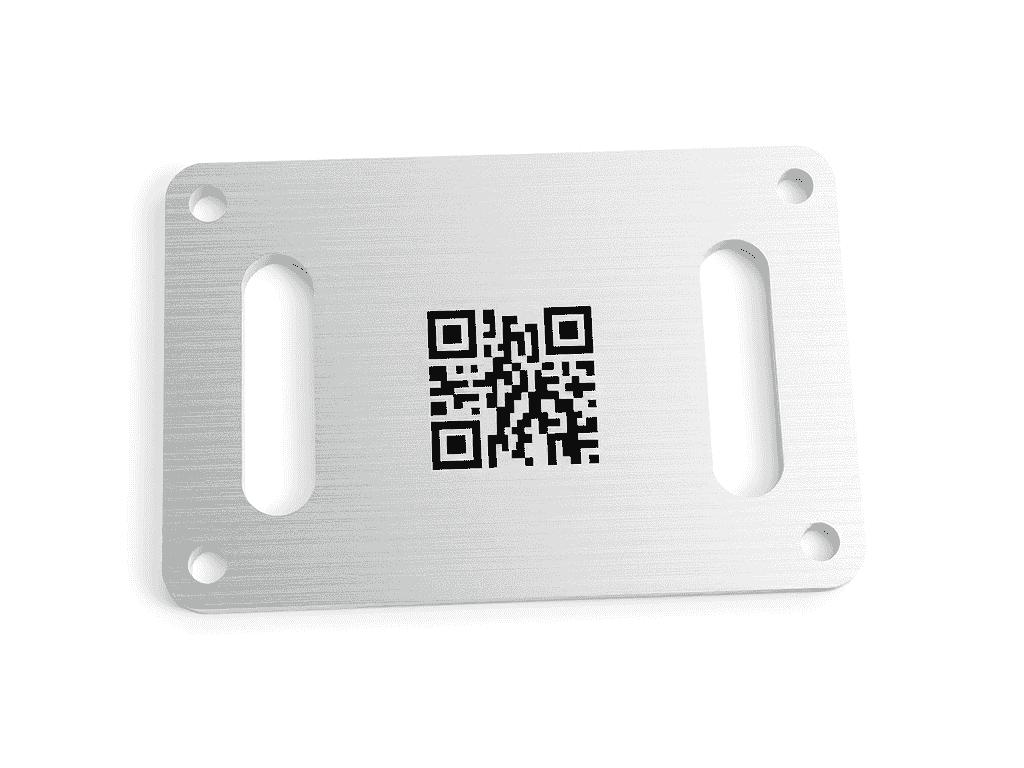
For the proposed drawing review, distinguish the size and position of a cut feature from its edge condition and from its relationship to later formed features. Protolabs publishes separate treatment of dimensions on one surface and dimensions that cross bends. [4] Protolabs. Its numerical tolerances are supplier-specific, so this guide does not transfer them to SSP or present them as universal stamping-versus-laser limits.
Define the edge that the assembly needs
Punching includes deformation, shearing and fracture of the sheet, as TRUMPF’s process sequence explains. [2] TRUMPF. Laser processing uses a different mechanism. Linde distinguishes oxygen-assisted cutting from inert-gas cutting, where laser energy melts the material and the gas removes it. Linde also notes that oxygen contamination in nitrogen can affect stainless edge oxidation and dross. [6] Linde.
Use those mechanisms to specify questions, not to declare an automatic winner. For example, ask each supplier how the delivered edge will be assessed for the intended contact, coating or assembly operation. If an edge must be deburred or otherwise finished, include that requirement in the quote and inspect it in the delivered condition.
Do not substitute “laser cut,” “precision stamped” or “burr free” for an acceptance definition. Proposed review items include the permitted edge condition, the relevant datum, the inspection stage and the treatment of inaccessible surfaces. Request evidence for the feature that matters to the assembly, rather than relying only on a general machine specification.
Validate the complete route
For a hypothetical bent bracket, a flat-blank inspection and a finished-bracket inspection answer different questions. The proposed approval plan should state both where useful. Protolabs’ single-surface versus across-bend discussion supports treating those feature relationships separately. [4] Protolabs. A flat sample alone should not be treated as approval of the subsequently formed assembly in this review.
Record any surface preparation or cleaning step before final inspection. Kenmode’s secondary-operations page is a useful reminder that deburring, plating, cleaning and assembly may remain part of a stamped component’s route. [5] Kenmode. Those are examples to check, not a statement that every part needs all of them.
Stamping vs laser cutting cost: a worked model
The following linear model is an illustrative comparison, not a quotation method mandated by a standard. Define total route cost as C = F + Q × v, where F is the fixed investment assigned to the comparison, Q is the accepted quantity of the defined revision, and v is the variable cost per accepted delivered part. Use one currency and equivalent scope for both routes.
Assume stamping has FS = USD 25,000 and vS = USD 0.35 per part. Assume the laser-based route has FL = USD 1,000 and vL = USD 1.55 per part. In this example, both variable figures are stipulated to include the same agreed material, required secondary operations, inspection and packing. These are invented inputs; real quotes must establish their inclusions.
| Accepted parts Q | Stamping: 25,000 + 0.35Q (USD) | Laser route: 1,000 + 1.55Q (USD) | Lower modeled cost |
|---|---|---|---|
| 1,000 | 25,350 | 2,550 | Laser route |
| 10,000 | 28,500 | 16,500 | Laser route |
| 20,000 | 32,000 | 32,000 | Equal |
| 50,000 | 42,500 | 78,500 | Stamping |
At 10,000 accepted parts, the example totals are USD 28,500 for stamping and USD 16,500 for the laser route. At 50,000, they are USD 42,500 and USD 78,500 respectively. These outcomes describe only the stated assumptions. They do not establish a production-volume rule for a different part or a different quotation.
Calculate the crossover explicitly
Set FS + QvS = FL + QvL. Rearranging gives Q* = (FS − FL) / (vL − vS). Here, Q* = (25,000 − 1,000) / (1.55 − 0.35) = 24,000 / 1.20 = 20,000 accepted parts. Both routes then total USD 32,000.
This expression assumes a positive fixed-cost premium for stamping and a positive variable-cost saving. If the variable costs are equal, there is no finite crossover from that saving. If the quoted relationships are reversed, inspect the actual cost lines rather than forcing a positive threshold. A mathematical intersection also does not approve technical feasibility or delivery capacity.
Test volume and design-change assumptions
Keep the hypothetical fixed-cost gap at USD 24,000 and vary only the assumed variable saving. Table 3 shows why the confidence in that saving matters. It does not claim that these savings occur in production.
| Assumed stamping saving (USD/accepted part) | Calculated equal-cost quantity (parts) | First whole-part quantity at or above crossover |
|---|---|---|
| 0.60 | 40,000 | 40,000 |
| 1.20 | 20,000 | 20,000 |
| 1.80 | 13,333.33, rounded | 13,334 |
Distinguish an exact tie from a rounded threshold. With the USD 1.80 assumed saving, 13,334 is the first integer quantity at which the modeled cumulative saving covers the fixed premium. The rounded 13,333.33 value is not a feasible fractional production order.
Use a quantity tied to a revision
As a proposed purchasing practice, compare a committed quantity, a documented forecast and an upside scenario separately. Do not amortize a tool across unrelated variants or unapproved future revisions without an explicit assumption. Ask how a changed cut-out, formed feature or material specification would affect each route’s tooling, programming, validation and delivery plan.
Sheet metal tooling investment should therefore be evaluated with the drawing-change history and the remaining quantity together. In the model, changing Q from 50,000 to 10,000 changes the preferred cost line. That is an arithmetic consequence of the chosen inputs, not evidence that stamping becomes unsuitable whenever demand falls.
If quoted variable prices apply only within certain lot bands, calculate those bands separately. Likewise, add separately quoted maintenance, change costs or delivery charges without counting an included item twice. The simple linear example is useful precisely because its exclusions and assumptions can be examined before a more detailed comparison is built.
Build a comparable quotation and approval record
The following is a proposed decision record. List the drawing revision, material specification, thickness, finished operations, critical characteristics, edge requirements and inspection method. For each supplier, attach the route, fixed charges, variable-price basis, order quantities, exclusions, tool ownership terms and responsibility for later changes.
Then record the evidence required before release: supplier feasibility feedback, agreed samples, finished-state inspection and any application tests required by the product specification. Identify unresolved assumptions explicitly. A cost spreadsheet should contain a route-approval status beside the price so a technically unapproved option is not accidentally treated as production-ready.
For a prototype-to-production transition, compare the final acceptance requirements with the prototype evidence. In this proposed workflow, a change from a laser-based route to stamping triggers a review of the affected features and a new approval plan, rather than assuming that a matching outline alone establishes equivalent results.
To decide when to switch from laser cutting to stamping, bring the route comparison, accepted-quantity scenarios and open technical questions to a review. If the stamping option is worth developing, discuss the drawing and trial requirements through SSP’s stamping-die manufacturing service. Request a project-specific proposal and evidence; this guide makes no price, capability or delivery promise for an unreviewed component.
A useful final decision states why the selected route meets the drawing, which cost assumptions support it, and what would trigger a new comparison. Those triggers might include an approved design change, a revised quantity commitment or a different finishing requirement. Assign an owner to review them so the original calculation remains traceable.
Frequently asked questions
At what volume is stamping cheaper than laser cutting?
There is no universal quantity in this guide. The hypothetical example crosses at 20,000 accepted parts because its fixed-cost gap is USD 24,000 and variable saving is USD 1.20 per part. Substitute comparable quotations and the approved revision quantity before making a purchasing decision.
Can laser cutting replace all stamping operations?
A cut profile and a formed feature require different operations. Kenmode describes stamping processes such as bending, drawing and embossing separately from cutting. A laser-based route needs the corresponding additional operations where the drawing requires them. [3] Kenmode.
Which route holds tighter tolerances?
Request feature-specific evidence for the complete delivered part. Protolabs distinguishes dimensions on one surface from those across bends; its published limits are its own service guidance. That supports a drawing-specific comparison rather than a universal tolerance ranking. [4] Protolabs.
Does a laser-cut edge always need no finishing?
Do not assume that from the process name. Linde explains that assist-gas conditions influence cut quality and that oxygen contamination can affect edge oxidation and dross. Agree and inspect the edge condition required by the application. [6] Linde.
How should sheet metal tooling investment be compared?
Use equivalent delivered scope and a defined revision quantity. Separate fixed investment from the variable accepted-part price, then record any excluded maintenance, changes and validation costs. The worked model is a starting worksheet, not a market quotation.
Technical references
Technical sources reviewed on 30 October 2026. Supplier-specific guidance is attributed within the text. The cost examples and proposed review procedures are original illustrative material.