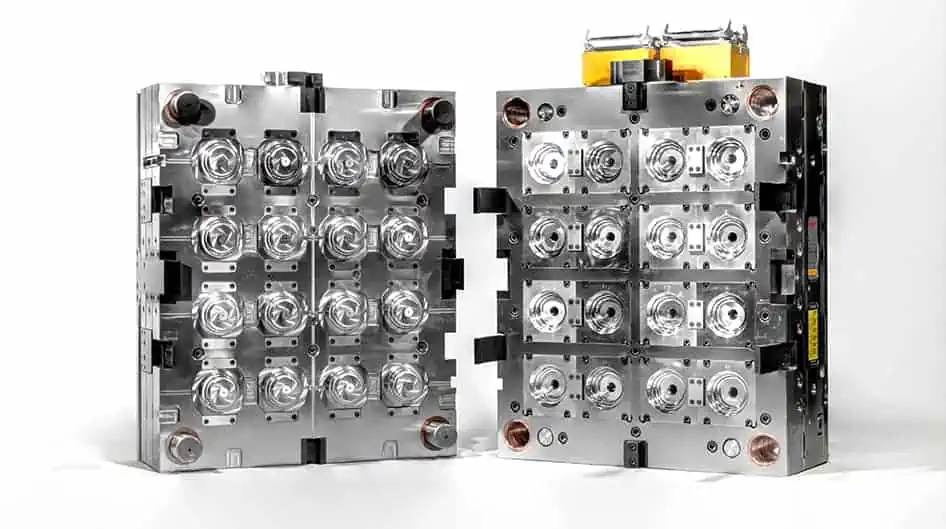
What Are Interchangeable Cores & Punches — and Why Do They Matter?
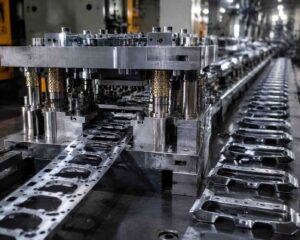
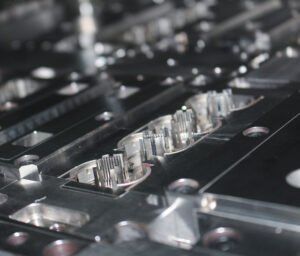
In modern manufacturing, interchangeable cores and punches for tooling are sort of the backbone of high-volume stamping and molding operations. These modular components—like precision-machined inserts, die punches, and core elements— are built so they can be swapped in and out of tooling assemblies without having to retool the entire die set. So the outcome is a more agile production floor, and notably lower downtime, at the same time.
Industry data tends to back this up. In a 2023 Global Tooling Industry Report, manufacturers that adopt interchangeable tooling systems reduce scheduled maintenance downtime by as much as 35% and also cut spare parts replacement costs by an average 28% each year. For high-volume operations running 3-shift cycles, that can realistically mean savings in the range of $50,000–$200,000 per production line yearly.
SSP, located in China, specializes in manufacturing and supplying these critical precision mold parts, for customers across automotive, electronics, medical devices, and consumer goods sectors worldwide. They focus on core elements and punch sets that need repeatable performance under production pressure.
Understanding Tooling Spare Parts from China: Quality vs. Cost
And yeah, the phrase Tooling Spare Parts China often gets asked, like: “can overseas sourcing truly match the tight tolerances required for precision tooling?” The straightforward answer, when you work with the right partner, is yes, without a lot of drama.
China’s manufacturing ecosystem has matured a great deal. The country now makes up more than 30% of global precision tool and die production, according to the International Metalworking Industry Association (2024). Companies such as SSP operate with capabilities that are comparable to tier-1 suppliers in Germany and Japan— including CNC grinding centers, wire EDM (Electrical Discharge Machining), surface grinding stations, and CMM (Coordinate Measuring Machine) inspection systems.
Key quality benchmarks SSP maintains include:
- Dimensional tolerances as tight as ±0.001 mm on Custom Wire EDM Parts
- Surface roughness down to Ra 0.2 μm for mold cavity inserts
- Full material traceability with mill certificates for all steel grades
- ISO 9001:2015-aligned quality management processes
This mix of precision capability and pricing that stays competitive, usually 30–50% lower than equivalent European or North American suppliers—makes China-based sourcing, a more preferred strategy for procurement teams who need reliable output
Component Comparison: Precision Mold Components & Interchangeable Core Inserts
The table below compares the key parameters for common tooling components available through SSP:
| Component Type | Tolerance Range | Typical Lead Time | SSP Advantage |
| Interchangeable Core Inserts | ±0.002 mm | 7–15 business days | Custom Wire EDM, in-house QC |
| Stamping Die Punches | ±0.003 mm | 5–12 business days | CNC + surface grinding |
| Custom Wire EDM Parts | ±0.001 mm | 3–10 business days | Sub-micron EDM accuracy |
| Precision Mold Components | ±0.005 mm | 10–20 business days | Full material cert. + traceability |
How Stamping Die Punches Are Manufactured: The Wire EDM Advantage
Stamping Die Punches are among the most stress intensive parts, in any press tool. A typical progressive die punch in an automotive body panel task may cycle 500,000–2,000,000 times, before a change out. Dimensional accuracy directly affects part quality and also die life , not only one thing
SSP manufacturing workflow for punches and core inserts, follows a structured, multi stage process:
- Raw Material Selection — Tool steels like SKD11, P20, S136, and tungsten carbide are sourced from certified mills, with full traceability
- Rough Machining — CNC turning, and milling brings blanks to near-net shape within 0.05 mm of final dimensions
- Heat Treatment — Hardening and tempering processes achieve target hardness, typically 58–62 HRC for punches
- Precision Grinding — Surface plus cylindrical grinding refine geometry to within ±0.003 mm
- Wire EDM Finishing — Custom Wire EDM Parts get the tightest profiles, ±0.001 mm, useful for complex geometries, keyways or blind pockets
- CMM Inspection — Every batch undergoes 3D coordinate measurement, with full report creation
A sort of notable case, in 2023 SSP shipped a batch, 240 interchangeable core inserts for an electronics connector mold (pitch 0.4 mm) to a Taiwanese OEM. The dimensional compliance came in at 99.6% , with a lead time of 9 business days, so yeah it beat the client’s prior domestic supplier by 4 days while costing about 22% less.
Material Selection Guide for Precision Mold Components
Choosing the right material is as critical as the machining process itself. SSP’s engineering team helps clients select the optimal grade based on application demands:
| Material | Hardness (HRC) | Best For | Industry Use Case |
| SKD11 / D2 Steel | 58–62 HRC | High-wear punches & inserts | Automotive stamping |
| P20 Tool Steel | 28–34 HRC | Mold core inserts | Plastic injection molding |
| Tungsten Carbide | 70–75 HRC (equiv.) | Ultra-wear punches | Electronics micro-stamping |
| S136 / 420 Stainless | 48–52 HRC | Corrosion-resistant cores | Medical device tooling |
Sourcing Strategy: How to Work with SSP for Tooling Spare Parts China
An effective procurement approach for precision tooling components is more than just bargaining over price. SSP basically frames its client collaboration around three key pillars, kind of like this:
1. Engineering Consultation First
Before anyone gets a quote, SSP’s team checks 2D drawings or 3D CAD data (STEP, IGES, DWG all accepted) to spot manufacturability snags, suggest substitute materials, or point out tolerance concerns… all of it without charging extra. This early review reduces the risk of expensive rework loops later.
2. Flexible Batch Sizes
Unlike some bigger, more rigid suppliers from China, SSP takes low-volume requests (sometimes 1–10 pieces) alongside higher-volume production runs. That gives R&D teams room to iterate, supports mold trial activities, and also helps when an unexpected replacement is needed. As a quick reference, about 40% of SSP orders in 2024 were for prototyping or trial quantities under 25 pieces.
3. Transparent Lead Times and Logistics
The lead times provided are binding promises, not just rough guesses. SSP provides DHL, FedEx, and sea freight choices, with full shipment tracking included. And if something is urgent, there’s an expedited option within 3–5 business days for standard part geometries.
SSP Is a Trusted Partner for Die Manufacturing Cost Optimization
SSP Precision is an ISO 9001 & IATF 16949 certified manufacturer delivering end-to-end precision solutions, from design and prototyping to high‑volume production, for the automotive, medical, electronics, aerospace, and industrial sectors. We handle every stage in‑house – DFM engineering, rapid prototyping, CNC machining, EDM, grinding, and global logistics – to manufacture the tooling that makes your parts and the parts themselves.
What we build and supply: visit our sites: https://SSP.com.cn/
- Stamping dies manufacturing and stamping die parts – high‑precision transfer stamping dies and progressive/compound dies for volume metal stamping.
- Injection molding and injection mold – custom injection molds for plastic components, including single‑, multi‑cavity, and over‑molding & insert‑molding tools that combine metal and plastic in one part.
- Specialty molded components – eco‑friendly green mold parts and microscopic medical micro‑molded parts.
- Precision metal and plastic end‑use parts – high‑volume serial production of precision products (metal stampings, plastic moldings) with full PPAP traceability.
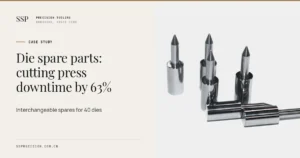
Tooling spare parts manufacturing & – tooling spare parts (punches, inserts, ejector pins) and precision robotics spare parts to keep your production running.
Frequently Asked Questions (FAQ)
Q1: What is the minimum order quantity for interchangeable core inserts at SSP?
SSP doesn’t enforce a strict MOQ. They accept single-piece orders for prototyping or emergency replacement, though the unit pricing is typically best when the quantity hits 10 pieces or more.
Q2: What file formats does SSP accept for custom tooling quotes?
SSP generally accepts 2D drawings in DWG, DXF or PDF formats, and for 3D models it accepts STEP, IGES, or SolidWorks (.SLDPRT) files too. If you are going for reverse engineering, physical sample measurement is also available, so that part-in-hand can be translated into a tooling-ready outcome.
Q3: Can SSP supply certified material test reports for Stamping Die Punches?
Yes. SSP keeps steel grades used for each run backed by mill certificates. And when it matters, upon request, additional third-party material analysis like spectrographic testing can be arranged for critical applications such as medical device tooling and other strict use cases.
Q4: How does Wire EDM improve the precision of Custom Wire EDM Parts?
Wire EDM works with a fine conductive wire (usually 0.1–0.25 mm diameter) and electrical spark erosion to cut hardened metals without real mechanical contact force. Because there is no direct pressing during the cut, it removes deflection errors you often get with conventional milling, leading to tolerances of ±0.001 mm. Also internal corners come out very sharp, which is important for interchangeable inserts that must mate cleanly with cavity plates.
Q5: What industries does SSP primarily serve with Precision Mold Components?
SSP primarily supports automotive, consumer electronics, medical devices, aerospace, and packaging. Their customers span multinational OEMs, plus smaller, regional moldmakers across Southeast Asia Europe and North America, depending on what kind of cavity hardware or mold components are needed.
Q6: How does SSP ensure part consistency across repeat orders?
SSP uses a master inspection record (MIR) for every recurring component, including CMM datum setups, and fixture references. That way the same measurement environment stays locked in repeat production, which keeps batch-to-batch dimensional variation under 0.002 mm for standard components, even when timelines get tight.
Read More – Knowledge That Keeps Your Shop Running
- Why Injection Molds Fail: Cracking & Galling Fixes – Because mold failures don’t send a warning text—they just stop production cold, and the clock starts ticking at $14,700 per incident.
- Stamping DFM: Optimizing Strip Layouts for Less Scrap – It’s not just about nesting tighter; it’s about redesigning the entire dance of the die to shave 18–27% off your material bill every single year.
- Micro Injection Molding: Controlling Flash on Tiny Parts – When parts weigh under 0.1 gram, even a 10-micron flash is a giant defect—here’s how to control the process on the smallest scale.
- Conformal Cooling in Injection Molding – Cooling eats 50–70% of your cycle time—here’s how 3D-printed conformal channels cut it by up to 40%, slash scrap by 65%, and pay for themselves in under 6 months.
- Micro Injection Molding: Controlling Flash on Tiny Parts – When parts weigh under 0.1 gram, even a 10-micron flash is a giant defect—here’s how to control the process on the smallest scale.
- Conformal Cooling in Injection Molding – Cooling eats 50–70% of your cycle time—here’s how 3D-printed conformal channels cut it by up to 40%, slash scrap by 65%, and pay for themselves in under 6 months.
- Stamping Tool Steel HRC Hardness Chart – A 2–3 HRC shift can swing die life by 20–40%—here’s the complete hardness chart for D2, SKD11, M2, and more, plus grade-specific wear data and application guidance.
- Injection Molding Guide: Costs, Materials, Process, and Mold Tooling – A prototype mold can cost $3,000, while a high-volume production mold runs $80,000+—here’s how to match tooling class to real production volume and avoid overpaying for steel.