

Most injection molding quotes are compared on a single number, and that number hides two completely different cost structures: a one-time mold tooling investment and a recurring per-part production cost. A buyer who only looks at “price per part” without understanding what’s driving the mold cost behind it will consistently pick the wrong supplier — sometimes paying too much for tooling they didn’t need, sometimes underpaying for a mold that won’t survive their real production volume. Once you separate mold cost, material cost, and cycle-time cost into their own line items, an injection molding RFQ becomes something you can actually negotiate instead of just compare.
What determines the real cost of injection molding? Two separate cost buckets: mold tooling cost (steel grade, cavitation, complexity, hot vs. cold runner) and per-part production cost (resin price, cycle time, labor, and mold amortization). A simple single-cavity prototype mold can run $3,000–$8,000, while a hardened multi-cavity production mold rated for over a million shots can run $25,000–$80,000+. Matching mold class to actual production volume — not over- or under-building the tool — is the single biggest lever on total program cost.
This guide solves three sourcing problems for engineers and procurement teams:
- How to match mold tooling class to real production volume so you’re not overpaying for steel you don’t need or underbuilding a mold that will fail early
- How to read an injection molding quote as two distinct cost buckets — tooling and per-part production — instead of one blended number
- How to structure an injection molding RFQ so quotes come back comparable across suppliers instead of quietly assuming different mold classes
Injection Molding Material Specification Matrix
Resin selection affects nearly every downstream cost — cycle time, shrink allowance, cooling time, and even mold steel choice for abrasive or high-temperature materials. The table below compares the resins most commonly specified on production drawings.
| Material | Typical Cost (USD/kg) | Shrink Rate | Typical Cycle Time (small part) | Common Application |
| Polypropylene (PP) | $1.20 – $1.80 | 1.5% – 2.5% | 15 – 25 sec | Living hinges, packaging, snap-fit housings |
| ABS | $2.00 – $2.80 | 0.4% – 0.7% | 20 – 30 sec | Consumer electronics housings, automotive trim |
| Nylon (PA66, unfilled) | $3.50 – $5.00 | 1.0% – 2.0% | 20 – 35 sec | Gears, structural clips, under-hood components |
| Polycarbonate (PC) | $3.80 – $5.50 | 0.5% – 0.7% | 25 – 40 sec | Optically clear parts, impact-resistant housings |
| Acetal (POM) | $3.00 – $4.20 | 1.8% – 2.5% | 20 – 30 sec | Precision gears, bushings, snap-fit fasteners |
| TPU (Thermoplastic Polyurethane) | $4.50 – $7.00 | 1.0% – 2.0% | 25 – 45 sec | Flexible seals, overmold grips, gaskets |
How to Calculate the True Cost of an Injection Molding Project
Initial parameter identification and data collection. Before any quote is built, a molder needs the full parameter set: part geometry and wall thickness, resin selection and any required certifications (UL, FDA, RoHS), tolerance and cosmetic (Class A surface) requirements, cavitation intent (single, multi, or family mold), and — critically — the annual and lifetime production volume. Volume is the single input that determines which mold steel class gets quoted; without it, a shop is forced to guess, and guessed quotes are almost always over-built and overpriced.
Core cost execution and the two-part formula. Injection molding pricing separates into tooling cost and per-part cost:
Mold Tooling Cost = Mold Base + (CNC/EDM Cavity & Core Machining Time × Shop Rate) + Hot Runner System (if applicable) + Texture/Finish + T1 Sample Trial & Correction
Per-Part Production Cost = (Resin Cost per Part + Machine Time × Hourly Rate + Labor/Automation + [Mold Amortization ÷ Total Program Volume]) × Margin
A worked example: a mid-complexity ABS housing needs a two-cavity P20 steel mold quoted at $18,000. At a 50,000-unit program, mold amortization alone adds $0.36 to every part; at 5,000 units, it adds $3.60 per part. The resin and cycle-time cost might be identical in both scenarios — the entire price difference comes from how many parts are absorbing the fixed tooling investment.
Regulatory compliance, verification, and sign-off. Before production release, the tool goes through a T1 (first-shot) sample trial, where dimensions are checked against the drawing and any GD&T callouts, cosmetic surfaces are checked against an approved sample or SPI finish standard, and — for regulated parts — material certifications and UL/FDA compliance documentation are verified before the mold is approved for production shots.
Hidden Cost Drivers: Mold and Process Variables That Quietly Inflate Injection Molding Pricing
Mold complexity compounds faster than cavity count alone. A mold with side-action sliders, lifters, or unscrewing cores for internal threads doesn’t just add machining time — it adds moving components that require their own maintenance schedule and wear tolerance, which raises both tooling cost and long-term mold upkeep cost.
Resin shrinkage dictates cavity geometry, not just part geometry. Every resin shrinks a different amount as it cools (see the material matrix above), so the mold cavity has to be cut larger than the final part by that shrink percentage. Getting this wrong on a resin substitution mid-program is one of the most common causes of an expensive mold rework.
Wall thickness uniformity drives cycle time and warp risk. Injection molding wants uniform wall thickness, typically 1.0–3.5mm depending on resin. Thick sections cool slower than thin ones, which extends cycle time and creates internal stress that shows up later as warping — a design issue that costs nothing to fix on a drawing but can cost thousands to fix after steel is already cut.
Gate location and runner design determine fill balance. In multi-cavity and family molds, an unbalanced runner system fills some cavities before others, producing dimensional inconsistency between cavities on the exact same shot. Correcting this after tooling is built (moving a gate, rebalancing a runner) is one of the most common sources of unplanned mold-rework cost.
Surface finish and texture requirements add a distinct tooling step. A standard SPI-B2 machined finish is baked into standard mold pricing, but cosmetic Class A finishes, EDM textures, or branded/logo textures are a separate finishing operation on the cavity steel, quoted independently of the base mold cost.
⚠️ Key Engineering Compliance Standard Standard Code: SPI/SPE Mold Classification Standard (Society of the Plastics Industry) Critical Threshold: Class 101 tooling (fully hardened steel, interchangeable components) is rated for 1,000,000+ production cycles; Class 105 tooling (soft steel or aluminum, prototype-grade) is rated for under 500 cycles before wear affects dimensional accuracy. Operational Impact: Quoting a Class 104/105 prototype-grade mold against a production volume above 100,000 units will cause premature tooling failure mid-program — the mold class has to match the actual production volume, not just the current order quantity.
Anatomy of an Injection Mold: Tooling Components and Material Science
A mold quote isn’t one object — it’s an assembly of distinct components, each with its own material and cost driver:
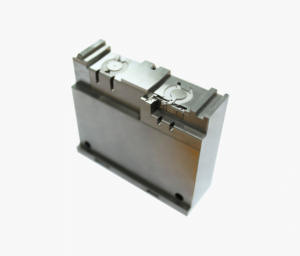
- Mold base: The structural frame holding all components in alignment; typically pre-hardened steel (P20 or equivalent), usually the smallest cost line relative to cavity work.
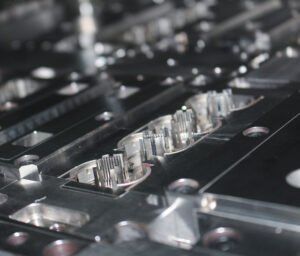
- Cavity and core: The steel that actually forms the part surface, machined via CNC and finished with EDM for fine detail; this is typically the largest single cost driver in the mold, scaling directly with part complexity and steel hardness.
- Runner and gating system: Cold runner (simpler, more material waste per shot) versus hot runner (higher upfront tooling cost, lower per-part resin waste and faster cycles) — the choice depends on production volume and resin cost.
- Ejector system: Pins, sleeves, or blades that release the finished part from the mold; complexity scales with part geometry and undercuts.
- Cooling channels: Drilled or conformal channels that control cycle time and warp; conformal (3D-printed) cooling costs more upfront but can meaningfully cut cycle time on geometrically complex parts.
- Slides, lifters, and side actions: Mechanisms that form undercuts or threads the mold can’t release straight; each one adds machining cost, maintenance cost, and a wear point to monitor over the mold’s life.
Mold Steel and Structural Tolerance Limits by Tooling Class
Choosing a mold steel class is fundamentally a bet on production volume. Under-building the tool for the real volume is the most expensive mistake in injection molding sourcing, because a failed mold mid-program means a second tooling investment on top of the first.
| SPI Tooling Class | Steel Grade & Hardness | Expected Shot Life | Achievable Tolerance | Min Wall Thickness | Typical Lead Time | Best-Fit Use Case |
| Class 105 (Prototype) | Aluminum or mild steel, unhardened | Under 500 shots | ±0.005″ (±0.13mm) | 1.5 mm | 1 – 2 weeks | Design validation, low-volume prototyping |
| Class 104 (Low Volume) | Aluminum or P20, 28–32 HRC | Up to 100,000 shots | ±0.003″ (±0.08mm) | 1.2 mm | 2 – 4 weeks | Bridge tooling, early production runs |
| Class 103 (Mid Volume) | P20 or 420 stainless, 30–35 HRC | 100,000 – 500,000 shots | ±0.002″ (±0.05mm) | 1.0 mm | 4 – 6 weeks | Standard production programs |
| Class 102 (High Volume) | H13 or S7, hardened 48–52 HRC | 500,000 – 1,000,000 shots | ±0.0015″ (±0.04mm) | 0.8 mm | 6 – 9 weeks | High-volume industrial and consumer production |
| Class 101 (Ultra-High Volume) | H13, fully hardened 50–54 HRC, interchangeable inserts | 1,000,000+ shots | ±0.001″ (±0.025mm) | 0.6 mm | 8 – 12 weeks | Automotive and high-cavitation mass production |
Injection Molding Machine Controls and Process Repeatability
Closed-loop cavity pressure monitoring is what actually keeps every shot dimensionally consistent — sensors in the cavity measure real-time pressure during fill and pack, and the machine controller adjusts hold pressure and time shot-to-shot to compensate for resin viscosity variation, which is invisible on a spec sheet but shows up directly in part-to-part consistency. Hydraulic, electric, and hybrid press platforms trade off differently: electric presses offer tighter repeatability and lower energy cost, hydraulic presses handle higher clamp tonnage more cost-effectively, and hybrid platforms split the difference for mid-tonnage precision work. Communication protocols such as Euromap 63/77 and OPC-UA let the press report cycle data, cavity pressure curves, and reject counts directly into a plant’s MES system, which is increasingly the evidence quality-focused buyers request during a supplier audit rather than relying on end-of-batch sampling alone.
Mold Maintenance Matrix: Preventive Intervals and Tooling Longevity
Daily / per-shift diagnostics: Visual inspection of parting lines and ejector pins, resin moisture/drying verification, and cavity pressure trend review against the established baseline.
Interval-based intervention (every 25,000–50,000 shots, class-dependent): Ejector pin lubrication, cooling channel flow-rate verification (scale buildup restricts cooling and silently extends cycle time), and vent cleaning to prevent gas-trap defects.
Major refurbishment (typically every 250,000–500,000 shots on hardened tooling): Full cavity polish restoration, slide and lifter wear-component replacement, and a dimensional re-certification against the original T1 sample to confirm the tool hasn’t drifted outside tolerance.
Injection Molding in Practice: A Field Case Study
The industrial challenge. A four-cavity family mold producing housing clips in a PC/ABS blend showed inconsistent warping on two of the four cavities, with flatness deviation reaching 0.4mm against a 0.1mm specification — enough to cause downstream assembly failures on roughly 9% of parts.
The custom engineering response. Flow analysis traced the issue to an unbalanced runner system: the two problem cavities were filling faster than the other two, causing uneven packing pressure and differential cooling. The gate locations were relocated to balance flow distance across all four cavities, and the cooling channel layout was redesigned from straight drilled channels to a more direct conformal path around the thicker boss features driving the warp.
The quantifiable outcome. Flatness deviation dropped from 0.4mm to 0.08mm — within specification across all four cavities — and cycle time decreased by approximately 12% due to the improved cooling efficiency. Scrap rate fell from 9% to under 1%, and the per-part cost decreased even though the mold rework carried an upfront cost, because the reduced scrap and faster cycle paid back the correction within the first 20,000 shots of the program.
SSP Is a Trusted Partner for Die Manufacturing Cost Optimization
SSP Precision is an ISO 9001 & IATF 16949 certified manufacturer delivering end-to-end precision solutions, from design and prototyping to high‑volume production, for the automotive, medical, electronics, aerospace, and industrial sectors. We handle every stage in‑house – DFM engineering, rapid prototyping, CNC machining, EDM, grinding, and global logistics – to manufacture the tooling that makes your parts and the parts themselves.
What we build and supply: visit our sites: https://ssprecision.com.cn/
- Stamping dies manufacturing and stamping die parts – high‑precision transfer stamping dies and progressive/compound dies for volume metal stamping.
- Injection molding and injection mold – custom injection molds for plastic components, including single‑, multi‑cavity, and over‑molding & insert‑molding tools that combine metal and plastic in one part.
- Specialty molded components – eco‑friendly green mold parts and microscopic medical micro‑molded parts.
- Precision metal and plastic end‑use parts – high‑volume serial production of precision products (metal stampings, plastic moldings) with full PPAP traceability.
- Tooling spare parts manufacturing & – tooling spare parts (punches, inserts, ejector pins) and precision robotics spare parts to keep your production running.
Optimizing Your Injection Molding RFQ: Technical Sourcing Checklist
Required RFQ Technical Parameters Checklist
- Annual and lifetime production volume — the single input that determines correct mold steel class
- Material specification — exact resin grade, colorant/masterbatch requirements, and any regrind tolerance
- Tolerance and cosmetic requirements — dimensional tolerances plus surface finish class (e.g., SPI-A1 for Class A cosmetic surfaces)
- Cavitation intent — single-cavity, multi-cavity, or family mold, and whether future cavity additions are anticipated
- Compliance certifications required — e.g., UL flammability rating, FDA food-contact compliance, RoHS/REACH
- Target tooling lead time and production start date — directly affects whether a bridge (low-volume) tool is needed ahead of the production tool
- Design files — native 3D CAD model plus a fully dimensioned 2D drawing with GD&T, not a 3D file alone
Frequently Asked Injection Molding Procurement Questions
- How much does an injection mold typically cost?
- A simple single-cavity prototype mold in aluminum or soft steel typically runs $3,000–$8,000, while a hardened, multi-cavity production mold rated for over a million shots can run $25,000–$80,000 or more. The main cost driver isn’t part size — it’s cavity count, steel hardness class, and mechanism complexity like slides and lifters.
- How long does injection mold tooling take to build?
- Prototype-class tooling (SPI Class 104/105) typically takes 1–4 weeks, while a fully hardened production mold (SPI Class 101/102) typically takes 8–12 weeks, including T1 sampling and correction. Adding hot runner systems or complex side-action mechanisms extends this timeline further.
- When does a family mold make sense instead of separate single-cavity molds?
- A family mold — multiple different part cavities in one tool — makes sense when parts are used together in the same assembly and share a similar wall thickness and resin, since mismatched fill rates between very different geometries commonly cause the packing and warp issues that offset the tooling savings. For parts with significantly different volumes or geometries, separate single-cavity tools generally produce more consistent quality.
Read More – Intelligence That Protects Your Production Line
-
What Drives Metal Stamping Die Costs? – A progressive die can cost anywhere from $8,000 to over $150,000—here’s a breakdown of the 5 key cost drivers, global price comparisons, and when to repair vs. replace.
-
Stamping Tool Steel HRC Hardness Chart – A 2–3 HRC shift can swing die life by 20–40%—here’s the complete hardness chart for D2, SKD11, M2, and more, plus grade-specific wear data and application guidance.
-
Troubleshooting Progressive Die Failures & Tool Wear – A 0.01mm drift or a faint burr is often the first warning—here’s how to read the data, schedule maintenance, and stretch tool life before scrap piles up.
-
Micro Injection Molding: Controlling Flash on Tiny Parts – When parts weigh under 0.1 gram, even a 10-micron flash is a giant defect—here’s how to control the process on the smallest scale.
-
Conformal Cooling in Injection Molding – Cooling eats 50–70% of your cycle time—here’s how 3D-printed conformal channels cut it by up to 40%, slash scrap by 65%, and pay for themselves in under 6 months.
-
Why Injection Molds Fail: Cracking & Galling Fixes – 62% of unplanned mold downtime comes from just three failure modes—here’s the root-cause data and preventive fixes for cracking, galling, and ejection issues.
-
Sourcing Interchangeable Cores & Punches for Tooling – Stop stocking a warehouse of custom spares—this approach slashes downtime by over a third and keeps your press running while others scramble for replacements.
-
Stamping DFM: Optimizing Strip Layouts for Less Scrap – It’s not just about nesting tighter; it’s about redesigning the entire dance of the die to shave 18–27% off your material bill every single year.
-
Injection Molding Guide: Costs, Materials, Process, and Mold Tooling – A prototype mold can cost $3,000, while a high-volume production mold runs $80,000+—here’s how to match tooling class to real production volume and avoid overpaying for steel.
References & standards
- ISO 9000 family — Quality management (ISO) — The quality management system standard SSP is certified to.
- ISO 286-1:2010 — ISO code system for tolerances on linear sizes — The international basis for the tolerance and fit classes quoted in this article.