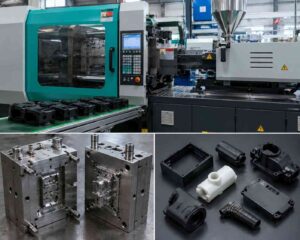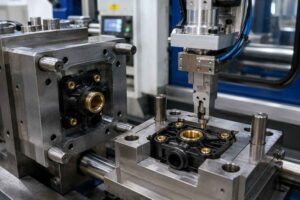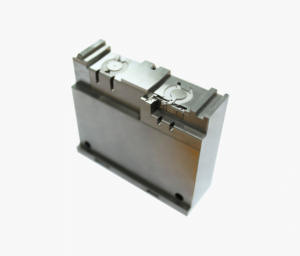


Precision guide pillars and bushings held to ±0.002 mm, plus custom mold inserts for automotive, medical, and electronics tooling. Partner with SSP today.
Inside every dependable injection mold and stamping die, a small set of components works harder than almost anything else in the tool. Guide pillars and bushings keep the two halves aligned on every cycle, so the cavity, cores, and slides meet exactly where they should. When they are right, you get consistent parts and long life. When they are wrong, flash appears, wear accelerates, and downtime becomes routine.
This article looks at how guide pillars and bushings work, what makes custom mold inserts and precision mold guides different from catalogue parts, and why a tolerance capability of ±0.002 mm changes what is possible in industrial production tooling.
Key takeaways
- Guide pillars and bushings are the foundation of mold alignment and die life
- Custom mold inserts and matched guide sets solve fit, wear, and application-specific problems
- Tolerances down to ±0.002 mm support tighter parts and longer tool life
- Materials, heat treatment, and surface finish are just as important as geometry
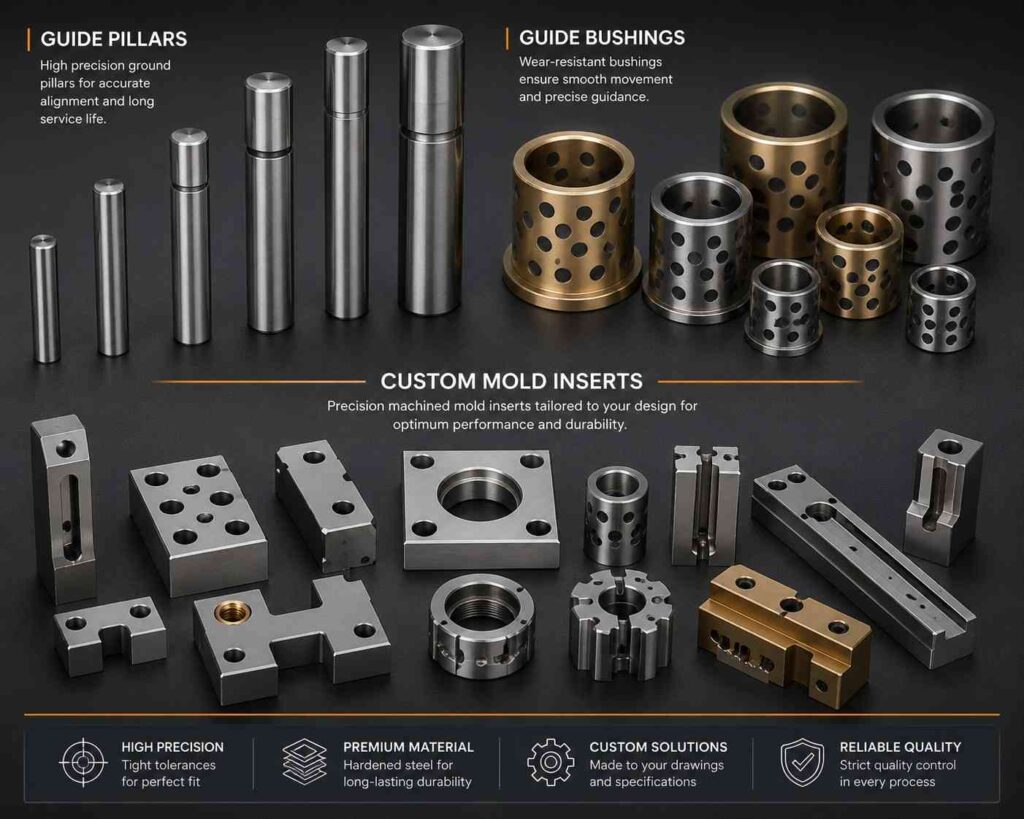
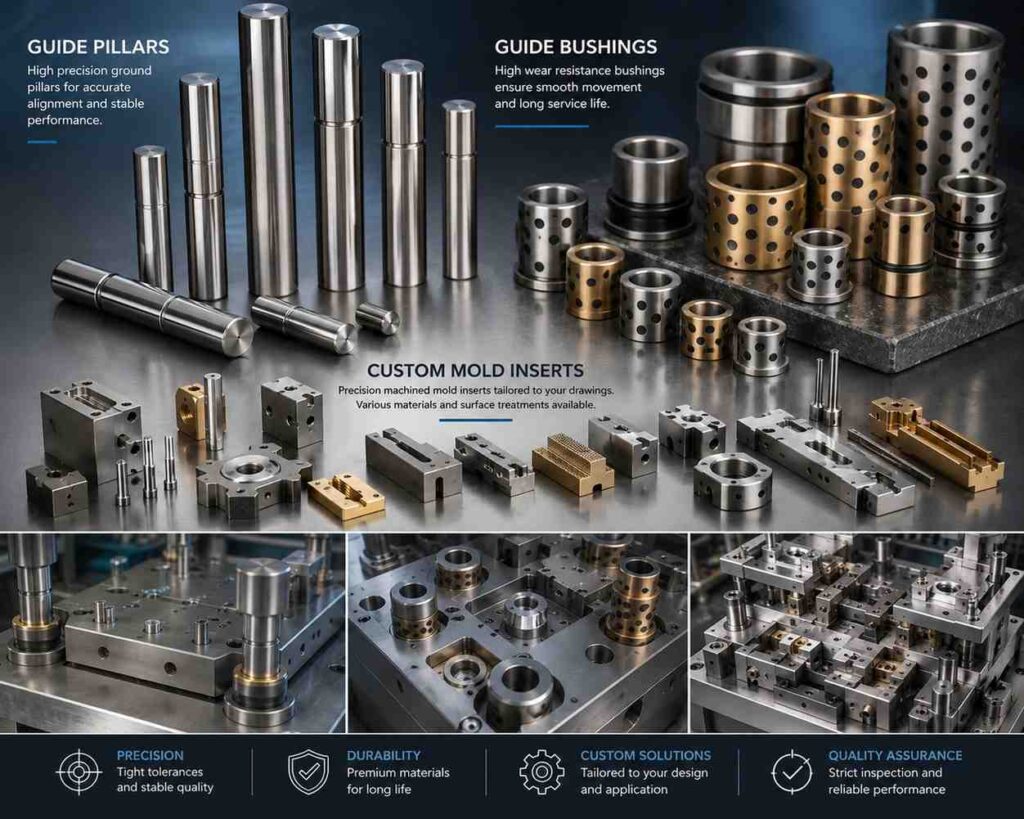
The Role of Guide Pillars and Bushings in Mold Performance
When a mold closes, the moving half travels along the guide pillars and slides into the bushings on the fixed half. That guided motion positions the cavity and core exactly, on every cycle. Without precise guidance, the halves can shift, producing parts with uneven walls, visible flash, or damaged surfaces.
Good guidance also protects the mold itself. By absorbing side loads and keeping the tool halves square, pillars and bushings reduce stress on cavity plates and cores, spread wear evenly, and extend the time between maintenance overhauls. In practical terms, proper guidance delivers:
- Consistent wall thickness and reduced flash on every shot
- Even wear across tool surfaces
- Lower stress on cores, cavity plates, and inserts
- Longer intervals between maintenance stops
How Guide Pillars and Bushings Fit Together
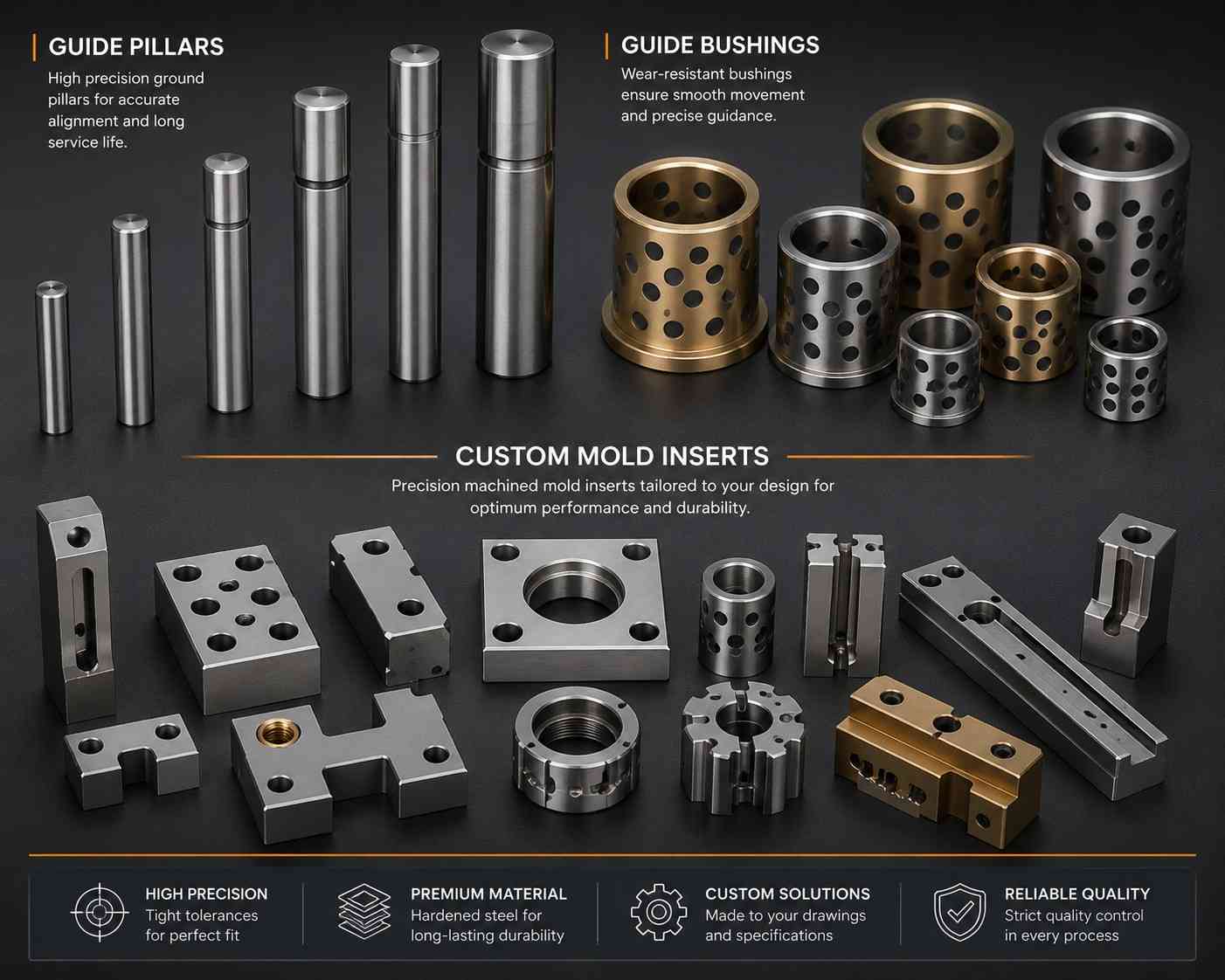
A guide pillar — sometimes called a leader pin — is a hardened, ground shaft mounted on the moving half of the tool. The guide bushing is its matching sleeve in the fixed half, sized to slide over the pillar with a precise clearance. In higher-precision molds, ball cages sit between pillar and bushing, replacing sliding friction with rolling contact for smoother, more accurate guidance.
The fit is everything. Too loose and the tool drifts; too tight and it seizes or scuffs. Manufacturers like SSP match pillars to bushings and hold the assembled clearance to tight limits, so the pair works as a unit rather than as two separate parts.
Custom Mold Inserts for Industrial Production Tooling
Catalogue guides suit many standard tools, but industrial production tooling rarely fits a neat catalogue. Non-standard lengths, unusual mounting arrangements, tighter-than-standard tolerances, and tooling that must be replaced without scrapping the mold all call for custom mold inserts and custom-machined guides. Custom is the right call when you need:
- Non-standard lengths, diameters, or mounting configurations
- Tolerances tighter than catalogue components
- Special surface treatments or coatings
- Replacement parts that must match an existing, proven tool
- Prototype and low-volume tooling where tooling cost matters
Precision Mold Guides: Materials, Heat Treatment, and Surface Finish
Material and treatment decide how long a guide survives. Hardened alloy tool steel is the common choice for pillars and bushings, with induction hardening or nitriding on wear surfaces and a ground or polished finish to minimise friction. Bronze-based bushings appear where a softer, self-lubricating partner is preferred.
| Component | Typical material | Treatment and finish |
| Guide pillar | Alloy tool steel | Induction hardened, hard chrome or ground finish |
| Guide bushing | Bearing-grade steel or bronze alloy | Hardened or nitrided, honed bore |
| Ball cage | Bearing steel | Precision-ground balls in a steel cage |
The ±0.002 mm Difference
Tolerance is where precision becomes measurable. SSP machines guide pillars and bushings to ±0.002 mm — a level of accuracy that keeps wear surfaces in line, minimises play, and prevents the micro-shift that slowly ruins a tool. Even a few microns of slop cause a die to wear unevenly, produce inconsistent parts, and fail earlier than it should.
Holding that tolerance takes more than a capable machine. It requires stable processes, careful heat treatment, accurate measurement, and the discipline to check every part. That is the difference between a machined component and an engineered one.
Applications Across Industrial Production Tooling
The same principle applies in every sector: predictable tool performance. Precision guides, matched bushings, and custom inserts keep the tool faithful to its design for thousands — sometimes millions — of cycles. Here is where they matter most.
| Sector | Typical tooling | How precision guides help |
| Automotive & EV | Stamping dies, injection moulds for housings and brackets | Alignment under high clamp force, less flash |
| Electronics | Connector and housing micro-moulds | Repeatability on very small parts |
| Medical | Device and consumable moulds | Long stable runs with minimal contamination risk |
| Aerospace & energy | Structural and power components | Durability and accuracy in demanding use |
Common Failure Modes and How to Avoid Them
Guides do not wear out overnight; they fail because of accumulated neglect. Galling and scoring come from poor lubrication or contaminated surfaces; premature wear comes from misalignment; seizing comes from a fit that is too tight for the temperature and load the tool sees. The fixes are straightforward:
- Keep a lubrication schedule and use compatible lubricants
- Inspect clearance and surface condition on a regular cycle
- Replace pillars and bushings as matched sets, not one at a time
- Protect slides and guides from flash and contamination
Selecting a Tooling Partner for Precision Mold Guides
Tooling spare parts are only cheap if they fit and last. Since 2008, SSP (ssprecision.com.cn) in Dongguan, China, has manufactured stamping dies, injection molds, and tooling spare parts, holding tolerances to ±0.002 mm and operating under ISO 9001:2015 and IATF 16949. That combination of tolerance, certification, and automotive-grade quality systems is what modern tooling projects need.
The right partner will ask about your tool, its cycles, and its environment before quoting. They will supply matched guide sets, confirm the materials and treatments that suit your application, and stand behind the parts with real inspection data.
SSP Is a Trusted Partner for Die Manufacturing Cost Optimization
SSP Precision is an ISO 9001 & IATF 16949 certified manufacturer delivering end-to-end precision solutions—from DFM engineering and rapid prototyping to high-volume production—for the automotive, medical, electronics, aerospace, and industrial sectors. We handle every stage in-house to manufacture the tooling that makes your parts and the parts themselves.
Visit our to explore our full capabilities: ssprecision.com.cn
Services (tooling design & manufacturing)
- Stamping Dies Manufacturing – high-volume metal stamping with Progressive Die Stamping & Tooling spare parts manufacturing and Transfer Stamping Dies
- Injection Molding – custom plastic molds including Over Molding & Insert Molding and Liquid Silicone Rubber (LSR) Molding
- Green Mold – eco-friendly molded components, Micro Molding – microscopic medical precision parts
Products (end-use parts & spare components)
- Stamping Die – complete stamping tooling
- Injection Mold – complete injection tooling
- Tooling Spare Parts – punches, inserts, ejector pins, Robotics Spare Parts – precision automation spares , Ball Screw Repair Kits – replacement kits for motion systems
- Machine Parts – general precision machine components
Frequently Asked Questions
- What is the difference between a guide pillar and a guide bushing?
The guide pillar is the hardened shaft mounted on the moving half; the guide bushing is its matching sleeve in the fixed half. Together they guide the mold halves into exact alignment on every cycle.
- What tolerance can you hold on guide pillars and bushings?
SSP machines guide components to ±0.002 mm, holding the assembled pillar-and-bushing clearance to tight limits so the tool stays square and wears evenly.
- How long do guide pillars and bushings last?
With correct material, heat treatment, lubrication, and maintenance, quality guides last for hundreds of thousands of cycles. Replacement depends on usage, environment, and how well the tool is cared for.
- Can you make custom mold inserts to match existing tooling?
Yes. SSP produces custom mold inserts and matched guide sets to the exact geometry of your existing tool, so worn components can be replaced without building a new mold.
- How do I request a quote?
Send your drawing or model with material and tolerance notes to SSP. Their engineers will review the fit, recommend treatments, and return a price and lead time backed by inspection data.
Read More – Intelligence That Protects Your Production Line
- Progressive Die Stamping for High-Volume OEM Parts – High-speed progressive dies run at hundreds of strokes per minute, holding tolerances to ±0.002 mm—here’s the guide to strip layout, tool steel selection, and why OEMs choose progressive stamping for terminals, brackets, and connectors.
- Injection Mold Tooling Design: Multi-Cavity Injection Molding – More cavities cut per-part cost, but only if the injection mold tooling design keeps every cavity balanced and repeatable—here’s the guide to cavity layouts, cooling, and tolerances from a precision mold shop.
- Top 10 Best Stamping Dies and Injection Molding Companies in the World – A data-driven ranking of the top 10 stamping die and injection molding companies globally—here’s how they compare across certifications, lead times, and cost, with a detailed China vs. rest-of-world breakdown.
- Precision Robotics Components: Spare Parts Supply Solutions – Custom robotics components and automation spare parts machined to ±0.002 mm—here’s the material selection guide, tolerance data, and why OEMs rely on precision machining for end-effectors, housings, and motion-critical parts.
- Precision Manufacturing China | IATF 16949 Certified Tooling – IATF 16949 certification isn’t just a badge—it means documented processes, defect prevention, and traceability for stamping dies and molds down to ±0.002 mm. Here’s what to look for in a certified tooling partner.
- LSR Injection Molding | Precision Liquid Silicone Rubber – LSR injection molding cures at 5 seconds per millimeter of wall thickness with tolerances to ±0.002mm—here’s the material grades guide, tooling requirements, and why OEMs choose silicone for seals, gaskets, and medical components.
- Heavy Duty Transfer Tooling: Multi-Station Transfer Dies for Deep-Drawn Components – Transfer dies handle individual blanks for deep-drawn and heavy gauge parts up to 8mm thick with tolerances to ±0.002mm—here’s how they compare to progressive dies for complex automotive and EV components.
- Precision Ball Screw Parts: Complete Component Guide – Backlash, noise, and lost accuracy are early signs of ball screw wear—here’s when to repair vs. replace, how to measure runout, and what a complete linear motion repair kit should include for C3–C7 tolerance classes.