

Need precision ball screw parts? SSPrecision is a linear motion repair kit supplier for factory machinery with tolerances down to ±0.002 mm.
Few components take a beating like a ball screw. On every stroke of a CNC machine, robotic arm, or transfer line, it carries the load, converts rotary motion into precise linear travel, and keeps doing it day after day. When it starts to lose accuracy — a little backlash here, a rough spot there — the machine is telling you it’s time for a repair, not a rebuild.
SSPrecision has manufactured stamping dies, injection molds, and tooling spare parts in Dongguan, China since 2008, and precision ball screw replacement parts are a core part of what we do. This guide covers what to check, when to repair instead of replace, and how to buy replacement parts that fit the first time.
Key Takeaways
- Backlash, noise, and lost accuracy are early signs of ball screw wear.
- Replacing the nut and ball set is often a fraction of the cost of a full screw assembly.
- Tolerance class (C3, C5, C7) must match your machine’s positioning needs.
- A complete linear motion repair kit saves days of downtime.
- Choose a supplier that makes the parts — not just resells them.
What Are Precision Ball Screw Replacement Parts?
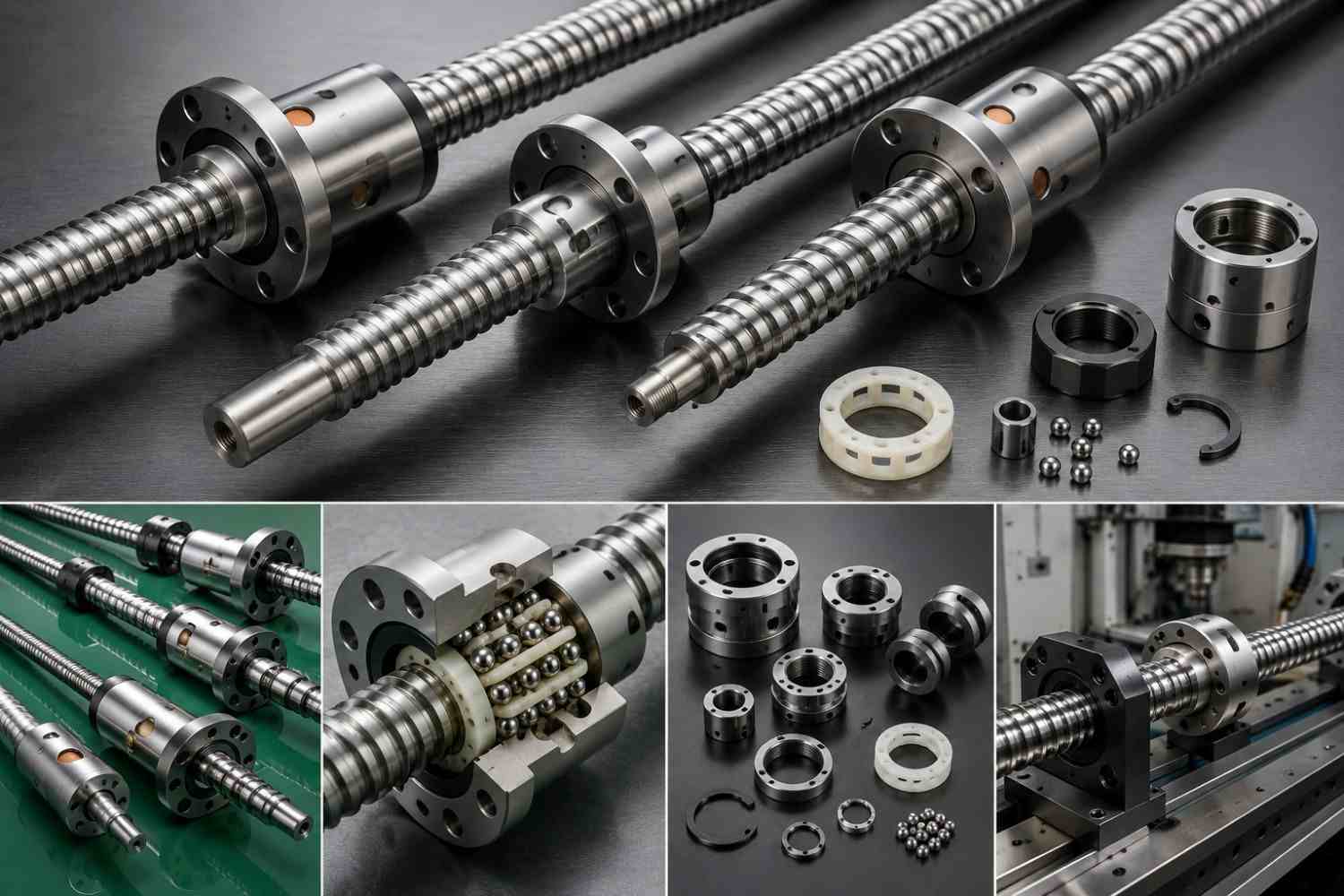
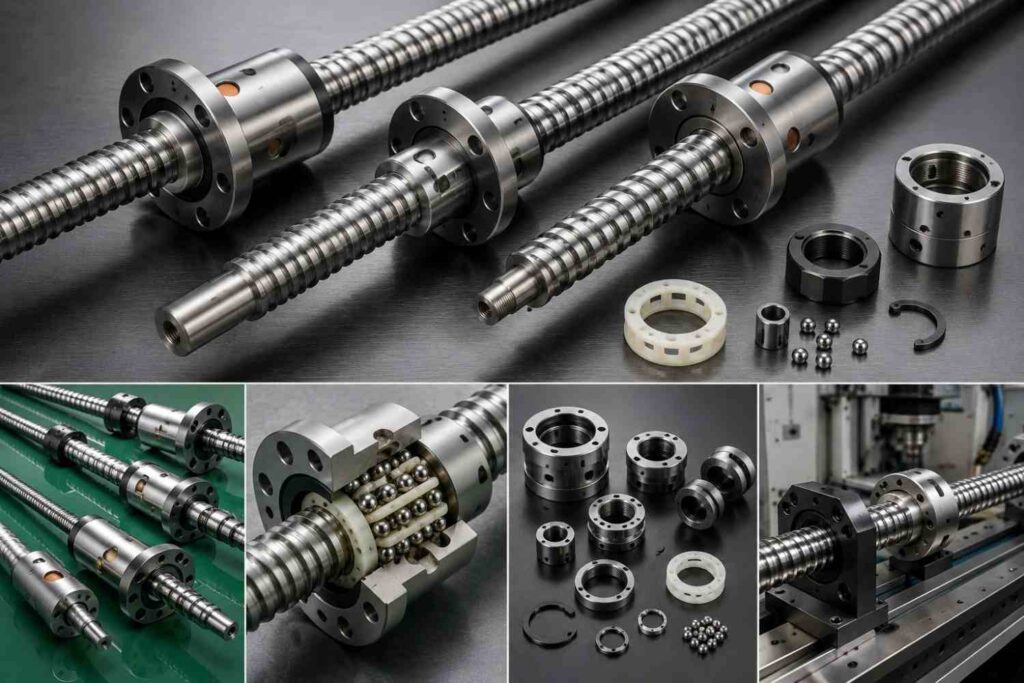
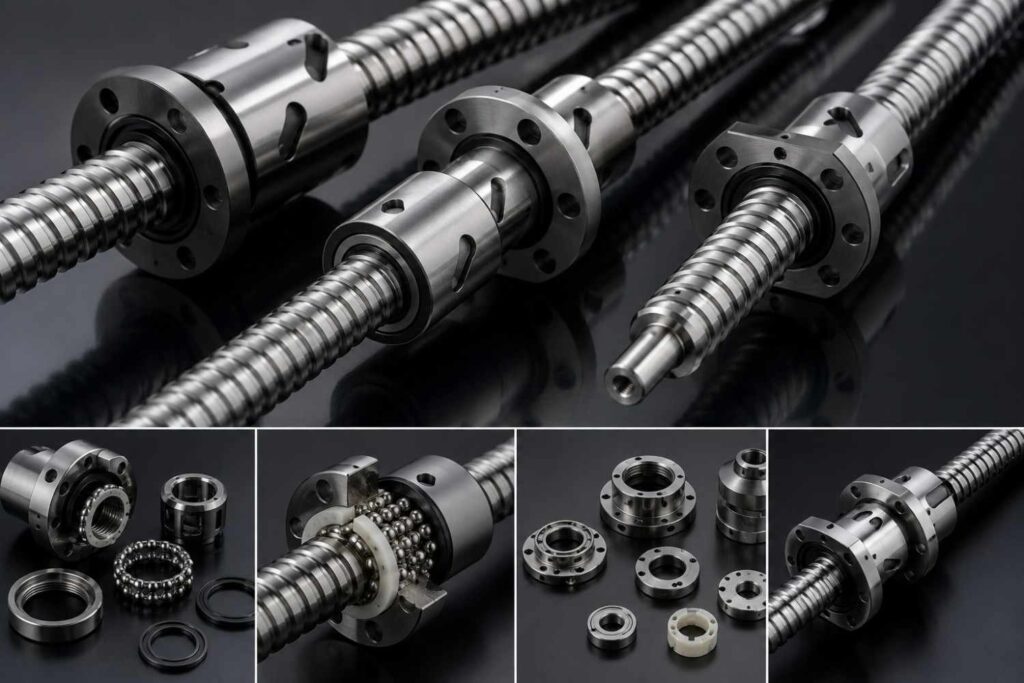
Inside a ball screw assembly, hardened steel balls roll between the screw shaft and the nut, turning sliding friction into rolling friction. Over time the raceways wear, the balls lose their roundness, and clearance grows. Precision ball screw replacement parts include the screw shaft, the nut assembly, ball sets, seals, wipers, flanges, and the small hardware that holds it all together.
Because every machine builder uses slightly different geometry, replacement parts must match the original in lead, diameter, preload, and mounting pattern. That’s where a manufacturer like SSPrecision adds value — we machine to the original spec, not an approximation.
The stakes are higher than they look. A ball screw that’s out of tolerance doesn’t just make bad parts — it can overwork the servo, distort the frame, and hide its own damage until one bad component scraps a whole batch. Catching wear early and fixing it with matched parts is how the best plants protect both their machines and their margins.
Ball Screw Failure: Symptoms and Root Causes
Catch the signs early and you save both money and machine time. Watch for these:
- Growing backlash — the axis “clicks” or dwells when it reverses direction.
- Audible noise — rattling or grinding that gets louder with speed.
- Loss of positioning accuracy — parts drift and offsets keep changing.
- Rough or uneven travel — the axis stutters or hunts.
- Visible wear — pitting, galling, or discoloration on the screw or nut.
The common root causes are contamination and failed wipers, insufficient lubrication, shock loads from crashes, and plain long-term fatigue. Fix the cause as well, or the replacement will wear out early too.
Repair vs. Replace: Making the Right Call
Not every worn ball screw needs a new shaft. Often the screw itself is still straight and true, and only the nut and balls have worn. In that case, replacing the nut assembly and ball set — a repair — restores original performance for a fraction of the cost and lead time of a full replacement.
When the shaft is bent, pitted, or worn past its tolerance, replacement is the only sound choice. A competent supplier can assess your returned part and give you an honest recommendation either way.
- Repair when: the screw is straight, raceway wear is minor, and only the nut and balls are gone.
- Replace when: the shaft is bent, galled, or visibly pitted, or its history is unknown.
Measuring the Damage: Backlash and Runout
Two quick measurements tell you most of what you need to know. Backlash is the lost motion when the axis reverses — clamp a dial indicator on the slide, reverse direction, and read the gap. If it’s creeping past the machine’s original spec, the preload has gone and the balls are worn.
Runout is about the screw itself: rotate the shaft with the indicator riding on the journal or raceway. High runout usually means a bent shaft, and that’s a replacement call. A few minutes with a dial indicator can save you from replacing parts that were never the problem.
The Real Cost of Downtime
Every hour a machine sits idle has a price, and it’s usually higher than the spare parts involved. A production line that loses a shift because of a failed ball screw loses output, misses deadlines, and may trigger penalty clauses with customers. Seen that way, a repair kit that restores the axis in a day is one of the cheapest insurance policies a plant can buy.
Plants that stock a ready repair kit for their critical axes cut their exposure dramatically. When the failure happens, the fix starts immediately instead of after a weeks-long sourcing cycle.
What a Linear Motion Repair Kit Should Include
A good kit turns a week of downtime into a day. SSPrecision packages the components you actually need for a typical ball screw service, matched to your machine model.
| Kit Component | Purpose |
| Ball set (matched to size and grade) | Restores correct preload and backlash |
| Ball nut assembly | Replaces worn raceways without a new screw |
| Seals and wipers | Keeps contamination out of the raceway |
| Lubricant | Correct grease or oil for the application |
| Mounting hardware | Flanges, bolts, and spacers if needed |
| Installation notes | Torque values and preload settings |
Tolerance Classes and What They Mean for Your Machine
Ball screws are graded by positioning accuracy. Choosing the right class keeps you from overpaying for precision you don’t need — or losing accuracy you do.
| Tolerance Class | Typical Positioning Accuracy | Typical Applications |
| C7 | About 50 µm / 300 mm | Standard machines, general automation |
| C5 | About 23 µm / 300 mm | CNC and precision assembly machines |
| C3 | About 8 µm / 300 mm | High-end CNC, semiconductor equipment |
| C2 / C1 | 5 µm or better | Ultra-precision, metrology, lithography |
How to Choose a Linear Motion Repair Kit Supplier
- Confirm they manufacture, not just resell — machining capability matters for fit.
- Ask about tolerance verification and inspection reports.
- Check experience with your machine brand and model.
- Verify materials — case-hardened, precision-ground steel shafts.
- Demand a clear lead time and a written warranty.
It also helps to ask what happens after the sale. Will they stand behind the parts, take a worn component back for evaluation, and advise on the next service interval? The suppliers who answer those questions well are usually the ones who’ve been doing this long enough to know.
SSP Is a Trusted Partner for Die Manufacturing Cost Optimization
SSP Precision is an ISO 9001 & IATF 16949 certified manufacturer delivering end-to-end precision solutions—from DFM engineering and rapid prototyping to high-volume production—for the automotive, medical, electronics, aerospace, and industrial sectors. We handle every stage in-house to manufacture the tooling that makes your parts and the parts themselves.
Visit our to explore our full capabilities: ssprecision.com.cn
Services (tooling design & manufacturing)
- Stamping Dies Manufacturing – high-volume metal stamping with Progressive Die Stamping & Tooling spare parts manufacturing and Transfer Stamping Dies
- Injection Molding – custom plastic molds including Over Molding & Insert Molding and Liquid Silicone Rubber (LSR) Molding
- Green Mold – eco-friendly molded components, Micro Molding – microscopic medical precision parts
Products (end-use parts & spare components)
- Stamping Die – complete stamping tooling
- Injection Mold – complete injection tooling
- Tooling Spare Parts – punches, inserts, ejector pins, Robotics Spare Parts – precision automation spares , Ball Screw Repair Kits – replacement kits for motion systems
- Machine Parts – general precision machine components
Frequently Asked Questions
How do I know if my ball screw needs replacing?
Measure backlash and runout, listen for noise, and inspect for pitting. If the shaft is straight but the nut is worn, a repair kit often does the job.
What tolerance class do I need?
Match the original spec. If it’s unknown, C5 is a safe default for most CNC and automation applications; use C3 or better for high-precision work.
Can an SSPrecision machine be my original part?
Yes — we reverse-engineer from your sample or drawing and hold tolerances to ±0.002 mm.
Do repair kits include installation instructions?
Yes. Each kit ships with torque values, preload settings, and fit notes.
What industries do you serve?
Automotive and EV, electronics, medical, aerospace, energy, and general industrial sectors.
Read More – Intelligence That Protects Your Production Line
- Applied Proof: Insert Molding Manufacturer Metal Insert – Insert molding fuses metal inserts into plastic in a single step, replacing secondary assembly and improving reliability—here’s how the process works, how it compares to overmolding, and what a custom insert molding partner needs to get right.
- Precision Ball Screw Parts: Complete Component Guide – Backlash, noise, and lost accuracy are early signs of ball screw wear—here’s when to repair vs. replace, how to measure runout, and what a complete linear motion repair kit should include for C3–C7 tolerance classes.
- Green Mold Technology: Eco-Conscious Mold Explainer – Sustainability starts at the tooling level—here’s how optimized gating, faster cooling, and ±0.002 mm precision reduce scrap, energy, and material waste across millions of cycles.
- Progressive Die Stamping for High-Volume OEM Parts – High-speed progressive dies run at hundreds of strokes per minute, holding tolerances to ±0.002 mm—here’s the guide to strip layout, tool steel selection, and why OEMs choose progressive stamping for terminals, brackets, and connectors.
- Injection Mold Tooling Design: Multi-Cavity Injection Molding – More cavities cut per-part cost, but only if the injection mold tooling design keeps every cavity balanced and repeatable—here’s the guide to cavity layouts, cooling, and tolerances from a precision mold shop.
- Top 10 Best Stamping Dies and Injection Molding Companies in the World – A data-driven ranking of the top 10 stamping die and injection molding companies globally—here’s how they compare across certifications, lead times, and cost, with a detailed China vs. rest-of-world breakdown.
- Precision Robotics Components: Spare Parts Supply Solutions – Custom robotics components and automation spare parts machined to ±0.002 mm—here’s the material selection guide, tolerance data, and why OEMs rely on precision machining for end-effectors, housings, and motion-critical parts.
- Performance Audit: Precision Die Manufacturer Sheet Forming – Die suppliers look similar on paper—here’s the 7-point audit checklist that separates real capability from marketing: Cpk data, tool life, repeatability, documentation, and how they respond when something goes wrong.
References & standards
- ISO 286-1:2010 — ISO code system for tolerances on linear sizes — The international basis for the tolerance and fit classes quoted in this article.