

What Are Insert Dies and Solid Dies?
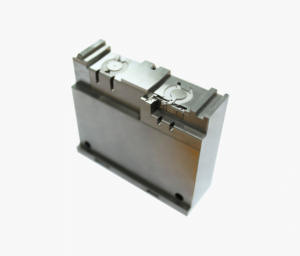
An insert die keeps individually hardened components, bolted in, like punches, pilots, bushings, and cutting blocks, sitting inside a common die holder. So when one section is damaged, it gets unbolted and swapped out, without needing to touch the rest of the tool. In contrast, a solid die is machined out of one continuous block of tool steel, with the cutting and forming geometry machined directly into the body itself. There is no modular swap. Once the working face wears beyond tolerance, the whole thing has to be reground before it can run again.
Engineering teams picking tooling for a new program end up in a fork that basically decides the years of operating cost: do you build the die from replaceable pieces, or machine it like one solid chunk . With Stamping Dies that are built around an insert system, a toolmaker can swap a worn punch in under an hour, but a solid die wants the full forming block reground before it comes back to the press, and that part always drags on a bit. This comparison looks at insert dies versus solid dies in terms of structure, day-to-day maintenance spend, and repair turnaround time, and also how a China based toolroom like SSP Precision supports both families of dies, regardless of which direction you go.
Insert Dies Vs. Solid Dies: Structural and Design Differences
The way the die is built changes almost everything downstream, from steel consumption, to how quickly a worn tool gets back into real production. The table below summarizes the main contrasts engineers typically weigh while they’re designing stamping tooling.
| Factor | Insert Dies | Solid Dies |
| Construction | Modular, bolted/pinned components | Single machined steel block |
| Tool Steel Use | Premium grade only at wear zones | Entire block in premium grade |
| Initial Build Time | Slightly longer to fit parts | Faster for simple geometries |
| Achievable Tolerance | ±0.002–0.005 mm | ±0.005–0.01 mm typical |
| Best Suited For | High-volume, automotive/EV parts | Simple, low-volume parts |
Tooling Maintenance Cost Analysis: Insert Dies Vs. Solid Dies
Ok so, it’s not that “quote” part that really hits you later, it’s the maintenance spend. For runs beyond 500,000 strokes, the total cost of ownership is basically decided by how often and how hard you have to repair the die. With insert replacement, the service event usually comes in around 10–20% of the original die value, because in most cases it’s only the used wear piece that gets reground or swapped out.
A similar solid die repair, like full-face regrinding or a full rebuild, often lands at 40–70% of the original tooling cost. And that makes sense, since the whole block has to get re-machined and re-hardened, not just one section. SSP Precision’s progressive dies are built for 2,000,000+ cycle life, using DC53 SKD11, and H13 tool steels, so the time between either kind of repair gets stretched out a lot.
| Maintenance Factor | Insert Dies | Solid Dies |
| Average Repair Cost | 10–20% of original price | 40–70% of original price |
| Typical Downtime | 4–24 hours | 3–10 days |
| Spare Parts Strategy | Stock interchangeable inserts | Stock a full spare die |
| Cycle Life Before Rework | 800,000–2,000,000+ strokes | 500,000–1,200,000 strokes |
| Best Fit (>1M strokes/yr) | Lower lifetime cost | Higher lifetime cost |
Die Repair China: How Localized Tooling Support Cuts Downtime
Now repair speed, well it depends on supplier capability, not just the die design itself. If the shop is ISO 9001 / IATF 16949 certified, and they are China based, it usually shortens the time between a worn component showing up, and the press basically running again. Typical advantages include:
- 20–45 day lead time for new tooling, plus major rebuilds
- In-house stock of DC53, SKD11, H11, H13, and M2 tool steels, so you don’t wait around too long
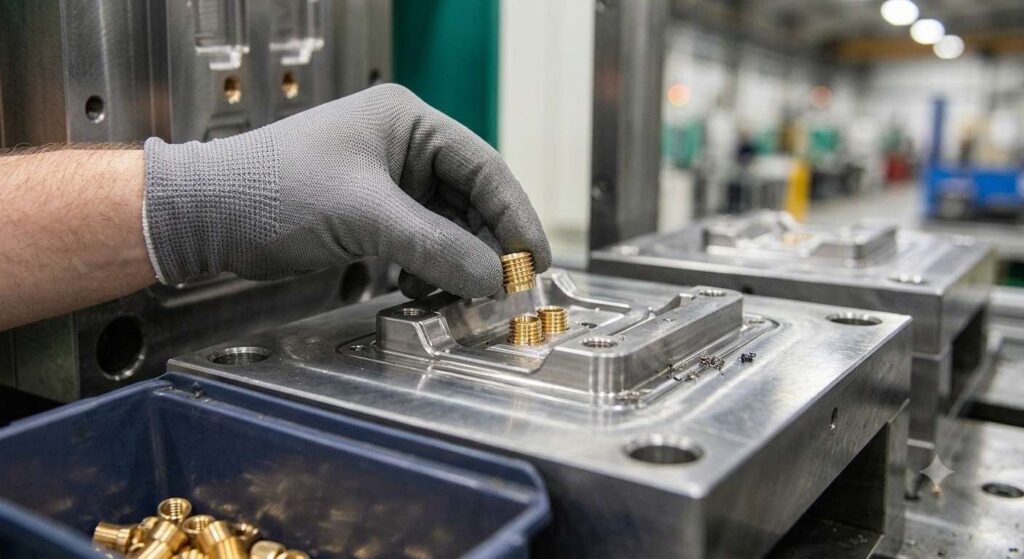
- 5-axis CNC and wire EDM handled inside the same facility for insert remanufacture
- 100% first-article CMM inspection before any repaired die ships out
- A 9,000 m² Dongguan facility with 80+ engineers supporting the repair queue, meaning less idle time
Stamping Die Comparison: A Real-World Production Example
So we got this automotive bracket program running around 1.2 million parts every year, across three shifts. If you’re using a solid progressive die, it usually means a full regrind somewhere in the 600,000–700,000 strokes range, and the press might be down 4–7 days each time. That’s basically 8–10 days of lost production a year, give or take. Now, when the wear stations are designed with inserts, the toolroom can pop in new punches in under a day, and annual downtime stays more like 2–3 days. And the part still lands within ±0.005 mm. Over three years, this kind of difference can easily cancel out 30–40% of the insert die’s higher initial cost, depending on the situation.
SSP Is a Trusted Partner for Die Manufacturing Cost Optimization
SSP Precision is an ISO 9001 & IATF 16949 certified manufacturer delivering end-to-end precision solutions, from design and prototyping to high‑volume production, for the automotive, medical, electronics, aerospace, and industrial sectors. We handle every stage in‑house – DFM engineering, rapid prototyping, CNC machining, EDM, grinding, and global logistics – to manufacture the tooling that makes your parts and the parts themselves.
What we build and supply: visit our sites: https://SSP.com.cn/
- Stamping dies manufacturing and stamping die parts – high‑precision transfer stamping dies and progressive/compound dies for volume metal stamping.
- Injection molding and injection mold – custom injection molds for plastic components, including single‑, multi‑cavity, and over‑molding & insert‑molding tools that combine metal and plastic in one part.
- Specialty molded components – eco‑friendly green mold parts and microscopic medical micro‑molded parts.
- Precision metal and plastic end‑use parts – high‑volume serial production of precision products (metal stampings, plastic moldings) with full PPAP traceability.
- Tooling spare parts manufacturing & – tooling spare parts (punches, inserts, ejector pins) and precision robotics spare parts to keep your production running.
Frequently Asked Questions
What is the basic difference between insert dies and solid dies?
Insert dies rely on replaceable, bolted in wear components, while solid dies are machined as one block, no swappable parts.
Are insert dies always cheaper to maintain?
Most of the time, yes for big volume runs, because repairs cost less and also take less downtime. But if you’re talking about simple designs, low annual volumes, a solid die can still end up being more economical.
When does a solid die make more sense?
For uncomplicated geometries, lower annual quantities, or short run and prototype tooling, when the extra fitting effort for inserts just doesn’t pay off.
How quickly can a stamping die be repaired in China?
A toolroom that has in-house CNC, EDM, and steel inventory can replace an insert within a day, and rebuild a full die in about 20–45 days.
Does insert construction reduce part precision?
No. Precision ground inserts can hit tolerances as tight as ±0.002 mm which can match, or even exceed a lot of solid die builds.
Read More – Intelligence That Protects Your Production Line
- Injection Molding Guide: Costs, Materials, Process, and Mold Tooling – A prototype mold can cost $3,000, while a high-volume production mold runs $80,000+—here’s how to match tooling class to real production volume and avoid overpaying for steel.
- What Drives Metal Stamping Die Costs? – A progressive die can cost anywhere from $8,000 to over $150,000—here’s a breakdown of the 5 key cost drivers, global price comparisons, and when to repair vs. replace.
- Stamping Tool Steel HRC Hardness Chart – A 2–3 HRC shift can swing die life by 20–40%—here’s the complete hardness chart for D2, SKD11, M2, and more, plus grade-specific wear data and application guidance.
- Troubleshooting Progressive Die Failures & Tool Wear – A 0.01mm drift or a faint burr is often the first warning—here’s how to read the data, schedule maintenance, and stretch tool life before scrap piles up.
- Micro Injection Molding: Controlling Flash on Tiny Parts – When parts weigh under 0.1 gram, even a 10-micron flash is a giant defect—here’s how to control the process on the smallest scale.
- Conformal Cooling in Injection Molding – Cooling eats 50–70% of your cycle time—here’s how 3D-printed conformal channels cut it by up to 40%, slash scrap by 65%, and pay for themselves in under 6 months.
- Why Injection Molds Fail: Cracking & Galling Fixes – 62% of unplanned mold downtime comes from just three failure modes—here’s the root-cause data and preventive fixes for cracking, galling, and ejection issues.
- Sourcing Interchangeable Cores & Punches for Tooling – Stop stocking a warehouse of custom spares—this approach slashes downtime by over a third and keeps your press running while others scramble for replacements.
-
Holding ±0.001 mm: Thermal Control in Precision CNC – A 2°C temperature swing can add 7 microns of error—here’s how thermal control architecture, spindle warm-up protocols, and granite bases make the difference between hitting tolerance and scrapping the part.
-
D2 vs DC53 Tool Steel: Which is Best for Stamping? – D2 has been the industry standard, but DC53 offers twice the toughness and better machinability—here’s the metallurgical data to decide which alloy delivers lower total cost of ownership for your stamping application.
-
China Fiber Optic Connectors | Injection Molding Precision Parts Manufacturer Company – Fiber optic connector housings demand ±0.01 mm tolerances on critical alignment features—here’s the material selection guide, cavity configuration data, and quality control protocols for precision optical components.
-
Reducing Cycle Time Through Better Mold Cooling – Cooling eats 50–70% of your cycle time—here’s how conformal cooling channels, turbulent flow design, and high-conductivity inserts can slash cooling time by 20–50% and cut overall cycle time by 15–35%.
References & standards
- ASTM A681-08(2022) — Standard Specification for Tool Steels Alloy — Chemical, mechanical and physical requirements for the alloy tool steels referenced here.