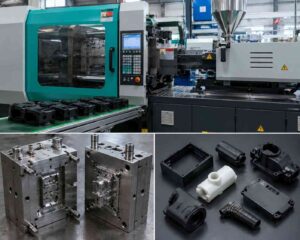


Choosing an insert molding manufacturer for metal insert plastic molding. Compare insert molding vs overmolding and see what custom insert molding really requires.
Look closely at almost any engineered product and you will find plastic and metal living together: a threaded brass insert molded into a nylon housing, a steel sleeve captured inside a switch body, a copper terminal held firmly in a plastic connector. Those joints exist because someone chose insert molding. An insert molding manufacturer takes preformed metal inserts, places them in the mold, and injects plastic around them, a single step that produces a bond adhesives and fasteners rarely match. In this article, we will show how metal insert plastic molding works, compare overmolding vs insert molding, and explain what a custom insert molding partner needs to get right.
- Insert molding fuses metal inserts into plastic in a single molding step.
- The process replaces secondary assembly, saving time and improving reliability.
- Insert molding and overmolding differ in what gets bonded and how the material is placed.
- A partner with tight tooling tolerances (±0.002 mm) and audited quality is essential for consistency.
What Is Insert Molding, Exactly?
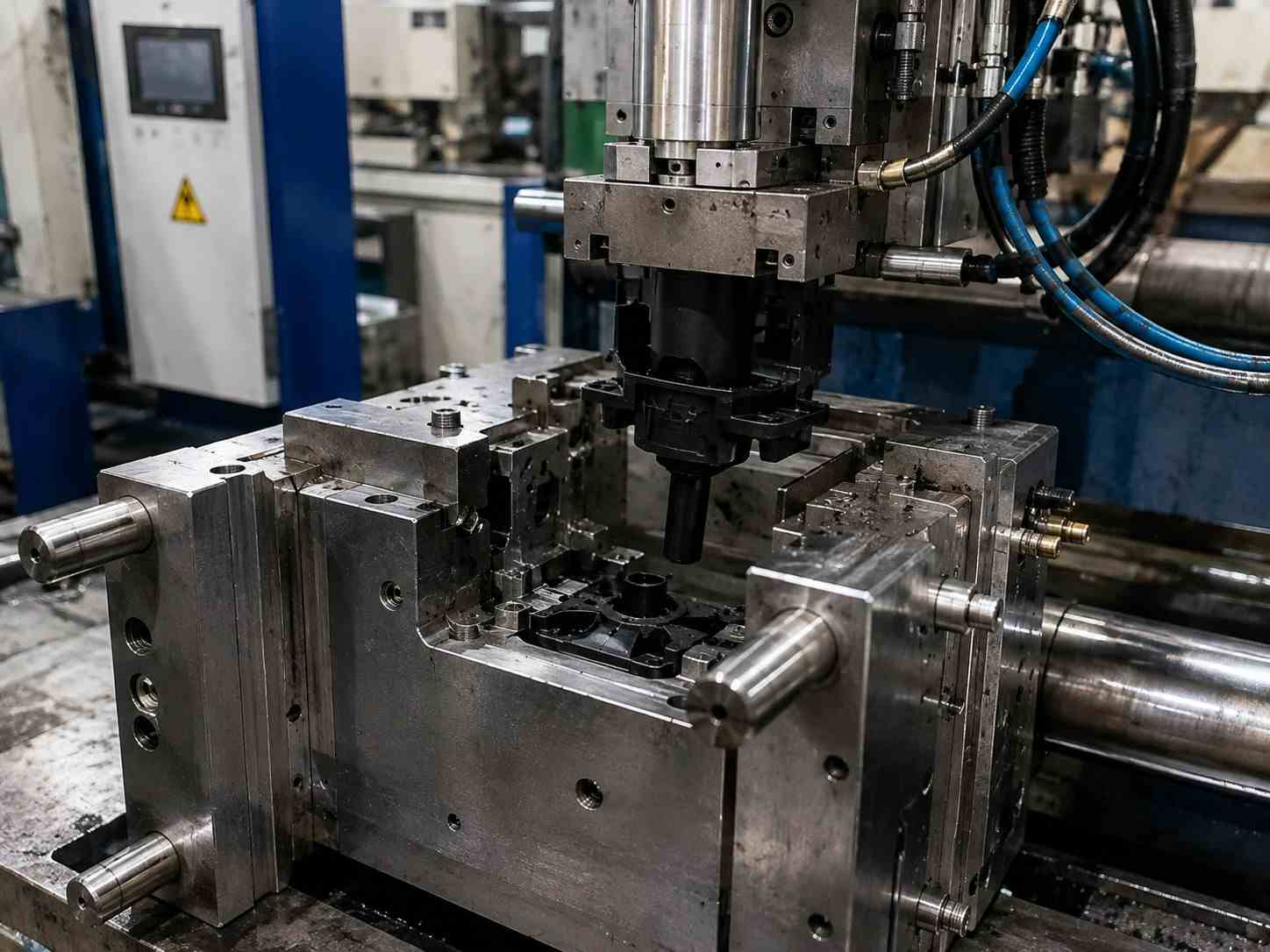
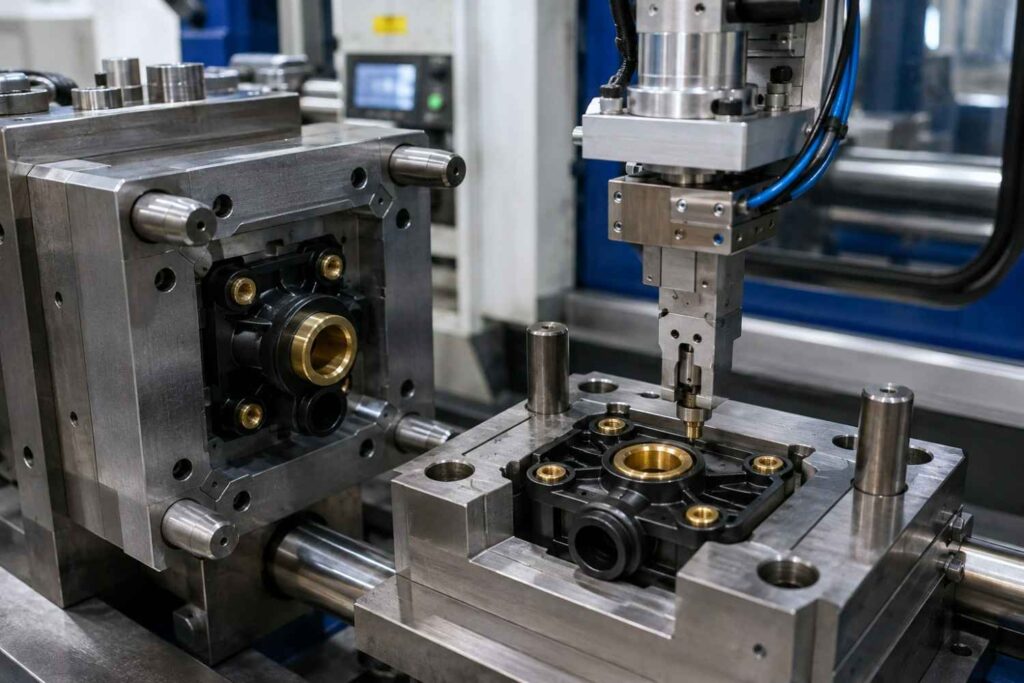
Insert molding is an injection molding process where a preformed insert, usually metal and sometimes ceramic, is loaded into the mold before plastic is injected. The plastic flows around the insert, and when it cools, the insert is locked firmly in place. No glue, no fasteners, no press fit.
Designers choose insert molding over fasteners for a simple reason: fewer parts, fewer steps, and fewer failure points. A molded-in thread cannot loosen the way a pressed nut can, and a molded-in terminal carries current without the play of a soldered joint.
The process in four steps
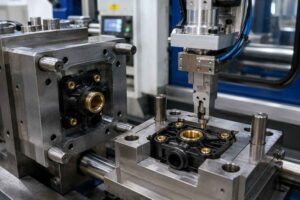
First, inserts are positioned in the mold, typically by a robot or an operator using locating pins. Second, the mold closes and plastic is injected under pressure. Third, the part cools and shrinks slightly, gripping the insert tightly. Fourth, the finished part is ejected, molded complete and ready for the next operation.
Why combine metal inserts with molded plastic?
Plastic brings shape, insulation, and low weight. Metal brings strength, threads, conductivity, and wear resistance. Insert molding lets designers take the best of both in a single, repeatable part, without a secondary assembly step and without the failure modes that come with press-fitted or glued joints.
Insert molding is also a forgiving process for design iteration. Because the mold is the only major investment, changes to the insert or the plastic are relatively cheap to trial, which makes it attractive for products still moving through validation.
Metal Insert Plastic Molding in the Real World
From electronics to the inside of a car, insert molding is everywhere, usually invisible and always functional. The same process that holds a terminal in a connector also anchors a brass nut in an automotive sensor housing.
Underneath the dashboard and inside the charging port of an electric vehicle, the same story repeats: a molded part that carries a metal interface, engineered so it survives heat, vibration, and thousands of mating cycles.
| Industry | Example parts | What the insert provides |
| Automotive / EV | Connectors, sensor housings, battery components | Conductivity and thread strength |
| Electronics | Terminals, sockets, switch bodies | Reliable electrical contact |
| Medical | Instrument housings, device fittings | Threaded metal mating surfaces |
| Aerospace | Interior fittings, lightweight mounts | Strength without added weight |
| Industrial | Handles, valve components, geared hubs | Wear resistance and drive strength |
Overmolding vs Insert Molding: How to Choose
The two processes are easy to confuse because both bond materials together. The difference is where the substrate comes from. In insert molding, you place a preformed insert into the mold and inject plastic around it. In overmolding, a substrate that was molded earlier is loaded in and a second plastic layer is molded over it.
| Factor | Insert molding | Overmolding |
| Bonded material | Preformed insert (usually metal) | Molded plastic substrate |
| Typical goal | Add threads, conductivity, strength | Add grip, sealing, soft-touch |
| Secondary assembly | Often eliminated | Usually one fewer step |
| Best for | Metal-to-plastic joints | Plastic-to-plastic layers |
A useful rule of thumb:
- Insert molding typically solves a structural or electrical need.
- Overmolding typically solves an ergonomic or sealing need.
- Many products use both, an insert for the thread and an overmold for the grip.
The choice often comes down to what fails in the field. A press-fit terminal that works loose under vibration calls for insert molding; a hard plastic grip that feels cheap in the hand calls for overmolding. Products in automotive and medical sectors regularly combine both, and a partner experienced in each will steer you to the right one.
Designing Inserts for Reliable Retention
For any insert molding manufacturer, the joint is only as strong as the grip between insert and plastic. Good insert design uses knurling, undercuts, or a grooved body so the plastic locks around the insert instead of relying on friction alone. When the insert is plated or anodized, surface texture and coating thickness affect both grip and corrosion resistance.
- Knurled or threaded bodies increase the contact surface and anchor the insert.
- Undercuts and cross-holes create mechanical interlocks for the plastic.
- Preheating the insert reduces residual stress and shrinks the plastic evenly around it.
- Insert material and plastic shrinkage must be matched to avoid loose or cracked joints.
Shrinkage is the hidden variable. Every plastic cools and shrinks after molding, and the insert resists that shrinkage, creating internal stress around the joint. Designers manage this with insert geometry, material choice, and process settings, and the difference shows up in whether the insert stays tight after a year of thermal cycling.
What a Custom Insert Molding Partner Must Get Right
Tooling precision at ±0.002 mm
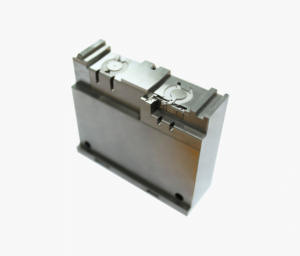
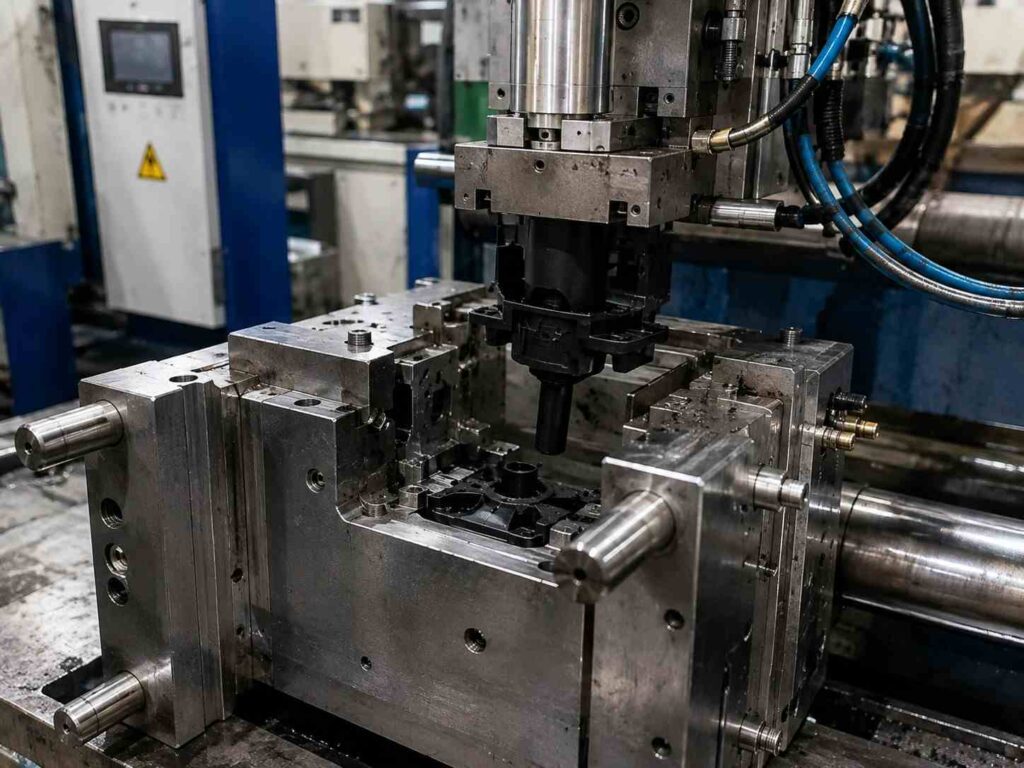
Insert position and mold fit decide whether the insert stays put, whether plastic flashes over it, and whether the thread stays clean. SSP builds tooling that holds tolerances of ±0.002 mm, the level of control that keeps inserts centered through hundreds of thousands of molding cycles.
Certifications and process control
ISO 9001:2015 and IATF 16949 certification signal disciplined processes. Material handling matters just as much: inserts should be cleaned, preheated if the design calls for it, and loaded consistently so that every cycle matches the last.
Volume changes the economics. For lower volumes, manual insert placement keeps tooling simple and setup fast. For higher volumes, robotic placement, automated insert feeding, and multi-cavity tools cut cycle time and remove the human variability that shows up as scrap. The right insert molding manufacturer structures the process around your expected volume rather than assuming one approach fits all.
Validation matters as much as production. Inserted parts should be checked for insert pull-out force, flash on critical surfaces, and dimensional consistency on the features that mate with other components. Ask for the test regime that comes with the quote, not just the price.
Common Pitfalls, and How Good Partners Avoid Them
- Insert slippage during injection, prevented by secure locating features in the mold.
- Flash over threads or contact surfaces, controlled by tool fit and clamping force.
- Thermal mismatch causing loose inserts, solved with preheated inserts and matched materials.
- Corrosion at the metal-plastic interface, addressed with plating and material selection.
- Inconsistent cycle times, eliminated with automation and operator training.
SSP Is a Trusted Partner for Die Manufacturing Cost Optimization
SSP Precision is an ISO 9001 & IATF 16949 certified manufacturer delivering end-to-end precision solutions—from DFM engineering and rapid prototyping to high-volume production—for the automotive, medical, electronics, aerospace, and industrial sectors. We handle every stage in-house to manufacture the tooling that makes your parts and the parts themselves.
Visit our to explore our full capabilities: ssprecision.com.cn
Services (tooling design & manufacturing)
- Stamping Dies Manufacturing – high-volume metal stamping with Progressive Die Stamping & Tooling spare parts manufacturing and Transfer Stamping Dies
- Injection Molding – custom plastic molds including Over Molding & Insert Molding and Liquid Silicone Rubber (LSR) Molding
- Green Mold – eco-friendly molded components, Micro Molding – microscopic medical precision parts
Products (end-use parts & spare components)
- Stamping Die – complete stamping tooling
- Injection Mold – complete injection tooling
- Tooling Spare Parts – punches, inserts, ejector pins, Robotics Spare Parts – precision automation spares , Ball Screw Repair Kits – replacement kits for motion systems
- Machine Parts – general precision machine components
Frequently Asked Questions
- What is the difference between insert molding and overmolding?
Insert molding injects plastic around a preformed insert, usually metal, to lock it in place. Overmolding molds a second plastic layer over an existing molded substrate. Insert molding creates metal-to-plastic joints; overmolding creates plastic-to-plastic layers.
- Can insert molding replace secondary assembly?
Yes. By molding threads, terminals, or bushings directly into the part, insert molding removes the pressing, gluing, or staking step, cutting labor and improving reliability.
- What tolerances can a good insert molding manufacturer hold?
With well-built tooling and process control, insert placement can be held to ±0.002 mm. Consistent insert positioning is what keeps threads clean and surfaces flash-free.
- What materials work best for metal inserts?
Brass, stainless steel, and zinc-plated steel are common choices. The insert’s plating and surface condition affect how well it bonds with the plastic, so material selection should happen during design.
- Can inserts be molded into soft or glass-filled plastics?
Generally, yes. Glass-filled nylon and similar engineering resins are often chosen precisely because they strengthen the joint around the insert. A capable partner will advise on compatibility before tooling.
Read More – Intelligence That Protects Your Production Line
- Precision Ball Screw Parts: Complete Component Guide – Backlash, noise, and lost accuracy are early signs of ball screw wear—here’s when to repair vs. replace, how to measure runout, and what a complete linear motion repair kit should include for C3–C7 tolerance classes.
- Green Mold Technology: Eco-Conscious Mold Explainer – Sustainability starts at the tooling level—here’s how optimized gating, faster cooling, and ±0.002 mm precision reduce scrap, energy, and material waste across millions of cycles.
- Progressive Die Stamping for High-Volume OEM Parts – High-speed progressive dies run at hundreds of strokes per minute, holding tolerances to ±0.002 mm—here’s the guide to strip layout, tool steel selection, and why OEMs choose progressive stamping for terminals, brackets, and connectors.
- Injection Mold Tooling Design: Multi-Cavity Injection Molding – More cavities cut per-part cost, but only if the injection mold tooling design keeps every cavity balanced and repeatable—here’s the guide to cavity layouts, cooling, and tolerances from a precision mold shop.
- Top 10 Best Stamping Dies and Injection Molding Companies in the World – A data-driven ranking of the top 10 stamping die and injection molding companies globally—here’s how they compare across certifications, lead times, and cost, with a detailed China vs. rest-of-world breakdown.
- Precision Robotics Components: Spare Parts Supply Solutions – Custom robotics components and automation spare parts machined to ±0.002 mm—here’s the material selection guide, tolerance data, and why OEMs rely on precision machining for end-effectors, housings, and motion-critical parts.
- Performance Audit: Precision Die Manufacturer Sheet Forming – Die suppliers look similar on paper—here’s the 7-point audit checklist that separates real capability from marketing: Cpk data, tool life, repeatability, documentation, and how they respond when something goes wrong.
- Engineering Walkthrough: Deep Drawn Transfer Dies Stamping – Deep drawing turns flat metal into seamless shells—here’s a stage-by-stage walkthrough of transfer dies, blank holder forces, draw ratios, and how to prevent wrinkling, tearing, and springback on heavy-gauge parts.
- Technical Framework: Multi-Station Progressive die Metal Forming – Progressive dies stack blanking, piercing, bending, and forming into one tool running at 1,200 SPM with ±0.002 mm tolerance—here’s the technical framework for multi-station die design, station sequencing, and automation integration.
References & standards
- ISO 9000 family — Quality management (ISO) — The quality management system standard SSP is certified to.